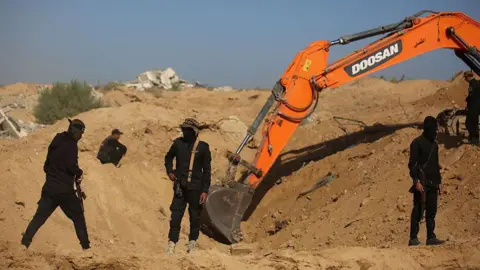
Hamas, despite its weakened state, continues to assert control over most of the enclave and aims to entrench its authority. The cease-fire agreement indicates a gradual withdrawal of Israeli forces from Gaza; however, Israeli troops maintain presence in strategically significant areas. Some right-wing Israeli officials advocate for expanding military control, even if it risks reigniting hostilities.
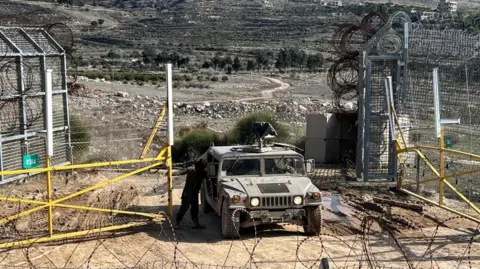
An alternative governance approach is being explored by a group of foreign security contractors, who are currently operating a checkpoint in northern Gaza. This initiative involves screening vehicles for weapons at the Netzarim Corridor and could evolve into a larger international stewardship role for Arab states, rather than private enterprises.
In a bid to regain influence, representatives from the Palestinian Authority (PA) have begun staffing a border crossing with Egypt, collaborating with European security personnel. The PA, which lost control of Gaza to Hamas in 2007, is hopeful that this initiative could eventually be expanded across the entire territory, providing a pathway for its re-establishment as a governing authority.
The situation remains fluid and complex, marked by competing interests and ongoing hostilities, but discussions about Gaza's future governance signal potential shifts in the region’s political landscape. As all parties navigate these multifaceted dynamics, clarity and cohesion may remain elusive in the journey toward peace and stability.
An alternative governance approach is being explored by a group of foreign security contractors, who are currently operating a checkpoint in northern Gaza. This initiative involves screening vehicles for weapons at the Netzarim Corridor and could evolve into a larger international stewardship role for Arab states, rather than private enterprises.
In a bid to regain influence, representatives from the Palestinian Authority (PA) have begun staffing a border crossing with Egypt, collaborating with European security personnel. The PA, which lost control of Gaza to Hamas in 2007, is hopeful that this initiative could eventually be expanded across the entire territory, providing a pathway for its re-establishment as a governing authority.
The situation remains fluid and complex, marked by competing interests and ongoing hostilities, but discussions about Gaza's future governance signal potential shifts in the region’s political landscape. As all parties navigate these multifaceted dynamics, clarity and cohesion may remain elusive in the journey toward peace and stability.