In brief
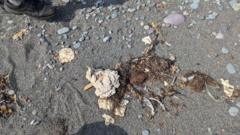
The coasts of Newfoundland have recently been visited by enigmatic white blobs, described as doughy and exuding a vegetable oil scent. Beachgoers first spotted this substance in early September, leading to various speculations. While theories have included palm oil, paraffin wax, and even ambergris, officials have ruled out some materials, including any petroleum or biological origin. As discovered by Stan Tobin, an environmentalist from Ship Cove, these blobs vary in size, appearing frequently along Placentia Bay's shores. Despite local and federal inquiries, the origins of these mysterious globs remain unsolved, prompting community concern over their presence and potential impact.
In recent weeks, Newfoundland's serene beaches have become the ground zero for a baffling investigation as peculiar white, doughy blobs have started mysteriously appearing along its coastlines. Sightings of these enigmatic substances commenced around early September, with locals like Stan Tobin, an environmentalist from Ship Cove, observing them scattered in large and small quantities across Placentia Bay’s beaches.Described as doughy and emanating a smell akin to vegetable oil, these blobs have sparked widespread interest and concern among the community and beyond. While initial conjectures have entertained the possibility of them being everything from palm oil to paran, or even elusive ambergris, the latter being particularly precious as a substance produced by whales and used in perfumery, experts have begun dissecting these hypotheses.Both Fisheries and Oceans Canada and Environment and Climate Change Canada have been drawn into the mystery, conducting thorough investigations alongside other regional authorities. Preliminary results have interestingly ruled out the blobs' connection to petroleum hydrocarbons, petroleum lubricants, biofuel, biodiesel, and any biological material or sea sponges. Despite these findings, the true nature and origin of these globular deposits remain elusive and unexplained.The phenomenon has not only intrigued local residents but also caught the attention of a wider audience online, where theories abound. One of the intriguing speculations online humorously likened the blobs' appearance to that of 'Toutons'—a popular regional treat made of dough, often fried. Nevertheless, the presence of these blobs is no laughing matter to concerned locals like Mr. Tobin, who actively engage in beach combing and coastal conservation. With hundreds of these blobs washing ashore, each approximately 6 inches in diameter, the enigma deepens, arousing both curiosity and unease within the community.As regional and federal bodies continue to probe the situation for more conclusive answers, it raises broader questions about marine pollution and environmental protection. As Mr. Tobin aptly put it, somebody somewhere knows the origin of these blobs, and there remains an urgent need to prevent further anomalies from disturbing the picturesque coasts of Newfoundland.