
In brief
Prime Minister Narendra Modi's recent remarks highlight a potential thaw in India-China relations, which have been strained since the 2020 border clash. While trade and cooperation continue, significant geopolitical challenges persist, suggesting complex bilateral dynamics ahead.
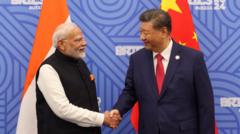
In a notable shift, Indian Prime Minister Narendra Modi has expressed optimism regarding the long-standing tensions with China, indicating that there has been a return to normalcy along the disputed border. Speaking in a recent interview, Modi advocated for a closer partnership with China—a noteworthy stance given the high-stakes rivalry that has characterized bilateral relations since the violent clash in Ladakh in 2020.The statement was welcomed by Chinese foreign ministry spokeswoman Mao Ning, who emphasized the need for both nations to be "partners that contribute to each other's success." Despite this apparent thaw, it's crucial to understand that the relationship remains fraught with underlying tensions that hinder true rapprochement.Strengths in the relationship are evident, particularly in robust bilateral trade. Despite past confrontations, China remains India's largest trading partner. Both nations find common ground in multilayered cooperation, participating in forums such as BRICS and the Asian Infrastructure Investment Bank. These collaborations underscore mutual interests, including economic development and countering regional terrorism.High-level military dialogues have persisted since the Ladakh incident, illustrating an appetite for dialogue and cooperation. These talks resulted in a deal to resume border patrols and a pledge for further collaboration during Modi's meeting with Chinese President Xi Jinping at a BRICS summit. Furthermore, the two nations recently agreed to reinstate direct flights, showcasing incremental progress.However, challenges loom large. India has bolstered security alliances with the U.S., while China's ties with Pakistan complicate the geopolitical landscape. China's assertive stance in the South China Sea and its backing of policies opposed by India, particularly regarding Kashmir, further strain the relationship.The future trajectory of India-China ties will depend heavily on several factors. Continued discussions about disputed territories—where significant areas remain contested—will serve as an essential litmus test for rebuilding trust. High-stakes personal diplomacy at upcoming summits, along with increased Chinese investment in India, may provide critical economic avenues to assuage tensions.Additionally, regional political shifts, such as new pro-China leaders in neighboring nations, will influence the dynamics between the two countries. If India and China can navigate these intricate geopolitical challenges successfully, a new era of cooperation could emerge, establishing a precarious balance in Asia's power landscape.In conclusion, although opportunities for cooperation are emerging, they are intertwined with complex geopolitical realities that will determine the future of India-China relations. Modi's remarks indicate a desire for progress, but translating that hope into reality will require careful navigation of longstanding disputes and broader regional dynamics.


