In brief
In January 2025, the world experienced its warmest January on record, even as many regions in the United States faced chilling weather. This unexpected rise in temperature has puzzled climate scientists since La Niña conditions typically lead to cooler global temperatures. Despite this, Earth's surface temperatures have been consistently high over the past two years, prompting scientists to investigate whether changes in planetary chemistry could be contributing to the ongoing heat, surpassing what carbon emissions alone would suggest.
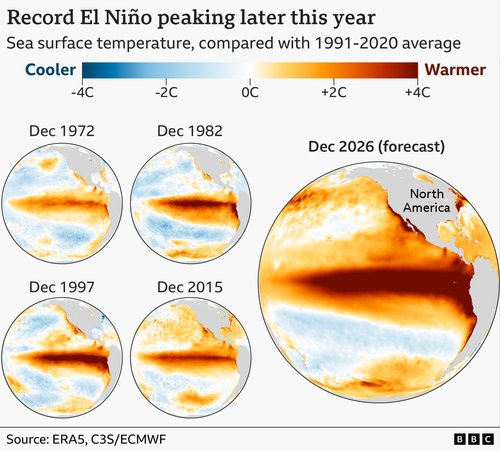
Carbon emissions from fossil fuel consumption remain the main driver of global warming, which peaked at unprecedented levels in both 2023 and 2024. Initially, researchers anticipated that 2025 would be slightly cooler due to La Niña. However, as Russell Vose, a climate scientist at the National Oceanic and Atmospheric Administration (NOAA), noted, the situation remains unpredictable. One year ago, experts were also cautious about declaring 2024 as the hottest year, only to find their predictions incorrect.The interaction between El Niño and La Niña conditions plays a crucial role in global temperature variations as they influence the distribution of heat between the ocean and the atmosphere. Nevertheless, other environmental factors also impact temperatures, leading scientists to remain vigilant and prepared for surprises in the ongoing climate crisis. Despite the uncertainty, the possibility remains that 2025 could follow the trend of recent years, reinforcing concerns about the overarching and accelerating trajectory of global warming.