Ukraine is preparing to present a revised peace plan to the White House, as it seeks to avoid making territorial concessions to Russia.
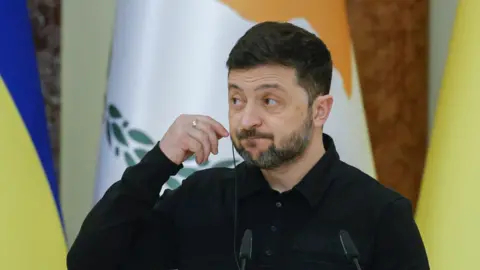
Kyiv is set propose alternatives to the US after President Volodymyr Zelensky again ruled out surrendering land, saying he had 'no right' to do so under Ukrainian or international law.
He made the comments as he met European and NATO leaders on Monday, part of a collective push to deter the US from backing a peace deal that includes major concessions for Ukraine, which allies fear would leave it vulnerable to a future invasion.
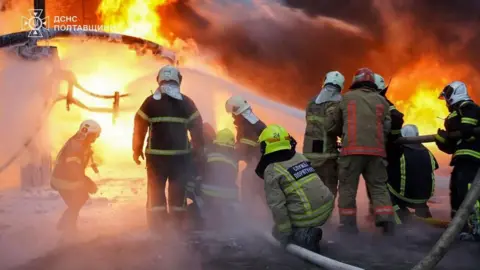
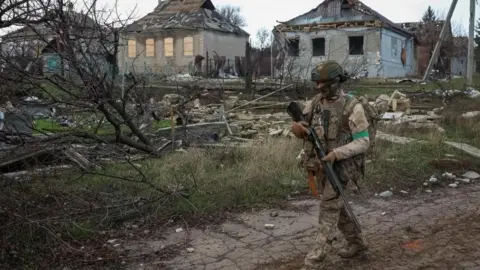
Meanwhile, the city of Sumy in north-western Ukraine was left without power overnight after a Russian drone attack.
The region's governor said more than a dozen drones had hit power infrastructure, the latest in Russia's nightly attacks. No deaths were reported.
Zelensky's ongoing diplomatic tour of Europe follows intense talks between US and Ukrainian negotiators over the weekend that failed to produce a deal Kyiv could agree to.
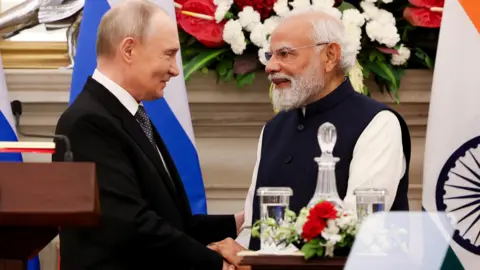
Zelensky was due to be briefed on that private summit on Monday by his chief aide Rustem Umerov, who wrote on Telegram that he would provide updates on discussions between the US and Russian President Vladimir Putin.
The Ukrainian president stated that his team could send a new proposal to the Americans as soon as Tuesday, according to AFP news agency.
Zelensky emphasized the unacceptable nature of territorial concessions, asserting: 'We don't want to cede anything.' He added, 'We have no legal right to do so, under Ukrainian law, our constitution and international law.'
He also maintained that any changes to Ukraine's borders would need to be authorized by a public referendum.
Elsewhere, he noted that the initial 28-point plan proposed by the US – which Kyiv and European leaders had deemed too favorable to Russia – had been trimmed down to 20 points. He clarified that no pro-Ukrainian points were removed from the draft, but there was no compromise regarding territorial issues.
Zelensky highlighted control over the eastern Donbas region and the Zaporizhzhia nuclear power plant as particularly sensitive matters. The previous US-backed plan had suggested Russia gain total control over the Donbas, despite failing to capture it even after years of conflict.
Leaders in Kyiv and across Europe have noted recent progress in refining the peace draft, thanking the US for its mediating efforts to resolve the conflict.
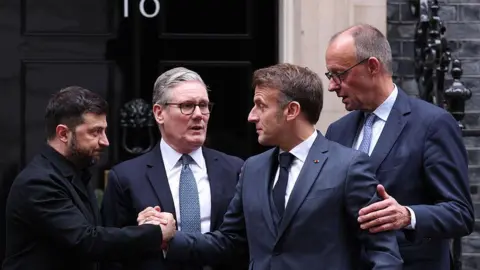
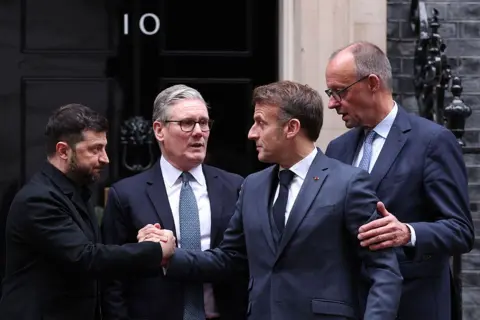
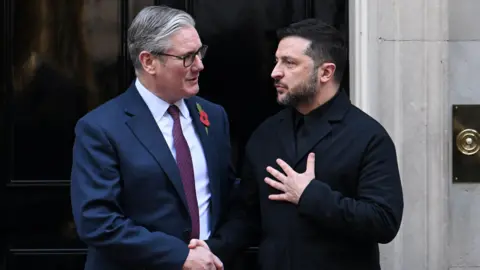
However, Monday's impromptu Downing Street summit – attended by Zelensky, UK Prime Minister Sir Keir Starmer, French President Emmanuel Macron, and German Chancellor Friedrich Merz – was perceived as a show of unity in support of Ukraine, resisting White House pressure for concessions.
The meeting concluded with an agreement that the US-led negotiations marked a 'critical moment' for enhanced support for Ukraine and reiterated calls for a 'just and lasting peace' that incorporates strong security guarantees.
Future security guarantees remain a central topic of debate in ongoing negotiations. Efforts are underway to assemble an international coalition to provide military backing to Kyiv post-peace deal, yet the nature of this support is still undetermined.
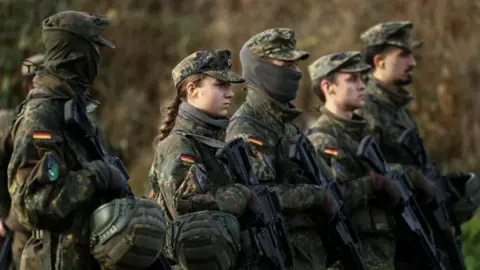
While the UK and France have suggested deploying international forces in Ukraine, skepticism persists among key European defense players like Germany and Italy regarding this option.
Exactly how willing the US would be to support new defense arrangements for Ukraine also remains uncertain.
Following his talks in London, Zelensky is set to fly to Brussels to engage with NATO chief Mark Rutte and EU chief Ursula von der Leyen, with a meeting planned with Italian Prime Minister Georgia Meloni on Tuesday.
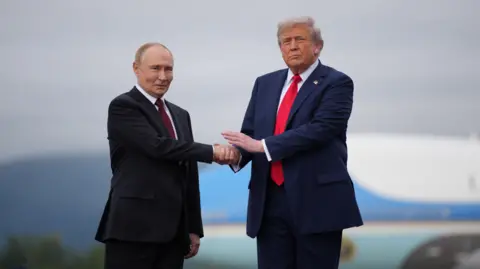
Despite the rapid unfolding of discussions, Moscow claims its conversations with the White House have been positive, although little progress seems evident on any of the Kremlin's broader objectives since the invasion began in February 2022.
In comments made by Trump on Sunday, he mentioned seeing Zelensky as a significant hurdle to achieving peace, which he has vowed to prioritize in his foreign policy as he campaigns for the 2024 presidential election.
He remarked on the peace plan discussed with both Ukraine and Russia but expressed disappointment that Zelensky had not yet reviewed it, leaving some ambiguity about the current state of agreements.