In brief
After President Trump withdrew a temporary ceasefire, the U.S. launched a seventh consecutive night of strikes targeting Iranian military assets. Iran’s Revolutionary Guards claimed oil tankers exploded in the Strait of Hormuz – a claim denied by U.S. commanders – while shipping through the vital corridor largely halted. Iranian forces also alleged attacks on U.S. bases across the Gulf and newly on Syria, but Washington insists strikes were confined to military targets. The week‑long offensive follows the collapse of peace talks that once sought a permanent ceasefire.
The U.S. military announced it has carried out the seventh consecutive night of strikes on Iran following the withdrawal of a temporary ceasefire by President Donald Trump.
The strikes, said to target Iranian military assets, are being conducted under the direction of the U.S. Central Command.
Iranian forces claimed that two oil tankers detonated in the Strait of Hormuz after passing through a mined segment of the shipping channel – a claim the U.S. has dismissed as false.
Despite these claims, the Strait has seen a steep decline in commercial traffic, which accounted for roughly 20% of the global oil and liquefied natural gas flow when operating normally.
Iran also alleged attacks on U.S. facilities across the Gulf, including bases in Kuwait, Bahrain, Jordan, and, for the first time, Syria. Washington has refused to confirm these incidents and has emphasized that all strikes have been on military targets.
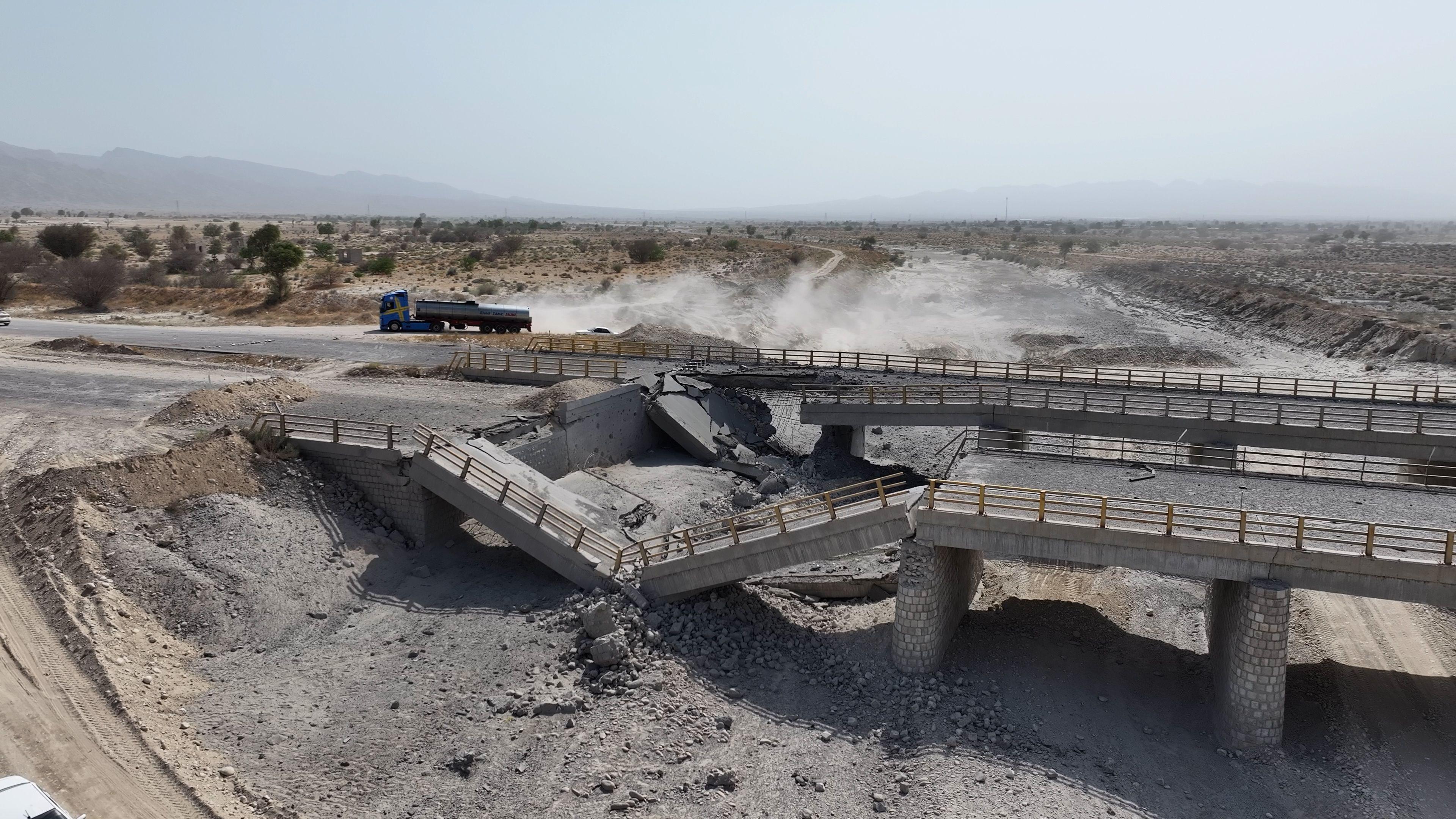
Video footage verified by BBC and BBC Persian shows damage to the Gariveh Bridge in Hormozgan province, with flames and rubble visible after late‑night incidents. Local authorities confirmed seven casualties from the strike.
The White House has reiterated that U.S. forces have only engaged military objectives and that civilian infrastructure was not targeted.
These nightly offensives mark a week of continuous pressure following the collapse of peace talks that once sought a permanent ceasefire between the two nations.