In brief
The USS Abraham Lincoln, a nuclear‑powered aircraft carrier, ended its record 250‑day deployment without a port call by docking near Pattaya, Thailand’s famed resort town. With its crew of nearly 5,000 men and women finally able to disembark, the port has seen a surge in local commerce, while U.S. and Thai authorities work to manage visitor behaviour. The arrival echoes the wartime history of Pattaya and highlights the delicate balance between military visits and local recreation. Community leaders and officials promise a controlled experience, limiting access to nightlife and other potentially sensitive areas. As the carrier prepares to begin the long return across the Pacific, both sides hope the crew departs refreshed and the local economy gains a temporary boost.
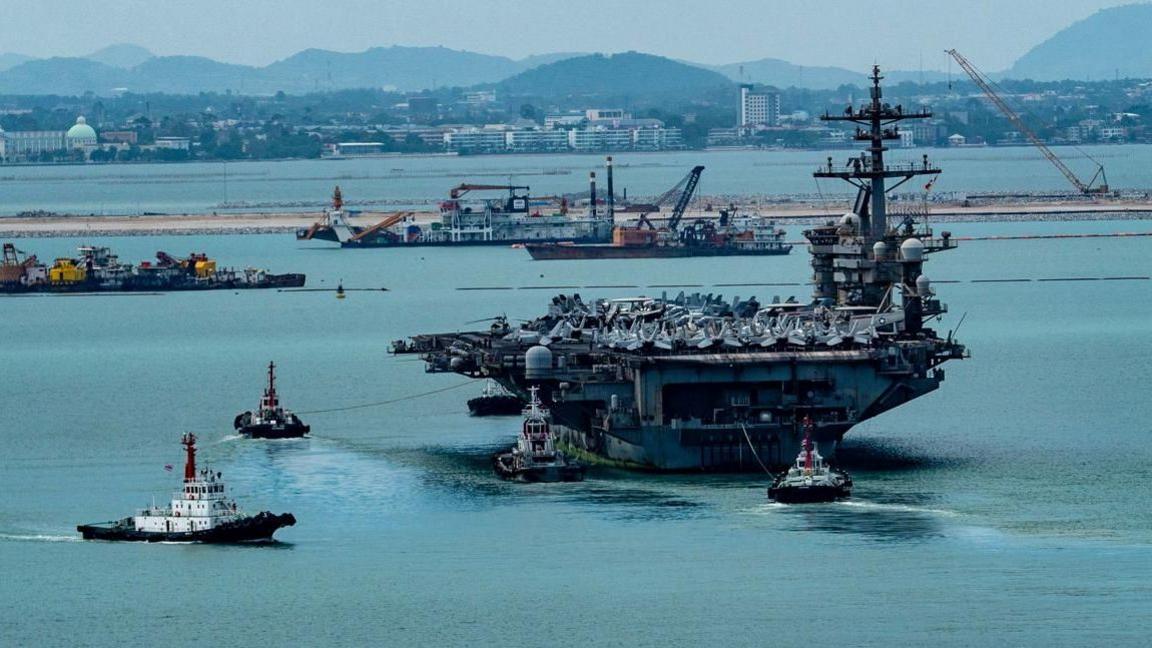
After a record‑length 250‑day cruise without a port stop, the US nuclear‑powered aircraft carrier USS Abraham Lincoln finally docked off the beach resort of Pattaya, Thailand. The ship’s nearly 5,000‑strong crew are now given a much‑needed break, signalling the start of a month‑long stay in the region before the vessel leaves for the Pacific on September 6.
Pattaya, known for its neon‑lit nightlife and history as a U.S. Rest and Relaxation hotspot during the Vietnam War, has seen a new surge of visitors as the Navy’s presence returns. The ship’s arrival echoes the era when thousands of U.S. troops stepped into the town’s bars and restaurants, turning a sleepy fishing village into a global party town.
Today the normally bustling streets are quieter, with bars still advertising sex‑dance shows in hopes of attracting this new crowd. The local economy, however, has been hit hard by the ongoing conflict in the Middle East, making the arrival of hard‑earned U.S. dollars a rare and welcome boost for businesses that are still trying to recover.
U.S. Navy officials have dismissed reports of food shortages, toilet problems, and mental stress among the crew as isolated incidents, but Congress has raised concerns about the ship’s conditions. The Navy remains tight‑lipped on details of the Pattaya docking, citing operational security.
While Thailand and the United States maintain a treaty alliance, the city has been cautious to limit the visitors to certain areas. Officers have barred access to Soi 6’s Chinatown‑like bars, with its concentration of go‑go venues, and have warned that U.S. crew can’t indulge in cannabis or water‑sports such as jet‑skis. These restrictions were imposed by mayor Poramase Ngampiches, who stressed the importance of keeping the visit tame and free of scandal.
Thai authorities have deployed hundreds of police officers to monitor the entertainment zones and to ensure businesses do not overcharge the American sailors. Two hotels have been marked as suitable for those wishing to indulge in a night out, and shuttle buses run from the port between 5 am and 2 am each day the carrier remains in the country.
Local business owners, such as gem dealer Anon Saiteer, are hopeful that the arrival will provide a much‑needed injection of spending for the city’s economy. Saiteer’s shop has even put up a sign welcoming the U.S. crew and offering a discount in exchange for their patronage.
By the time the USS Abraham Lincoln sets sail again from the Atlantic, it is anticipated that its crew will return home refreshed and ready for the next phase of their deployment.