
In brief
During a meeting at the White House, President Donald Trump expressed his willingness to consider granting Hungary an exemption from U.S. sanctions on Russian energy. Prime Minister Viktor Orbán emphasized the vital need for energy access, given Hungary's geographical limitations, and suggested specific arrangements for the exemption to alleviate the impact of the sanctions on his country. Orbán's delegation included influential political figures and business leaders. Additionally, a bipartisan resolution from U.S. senators calls on Hungary to reduce its reliance on Russian energy. Orbán aims to sign a bilateral nuclear energy agreement with the U.S., marking Hungary's shift towards American nuclear fuel.
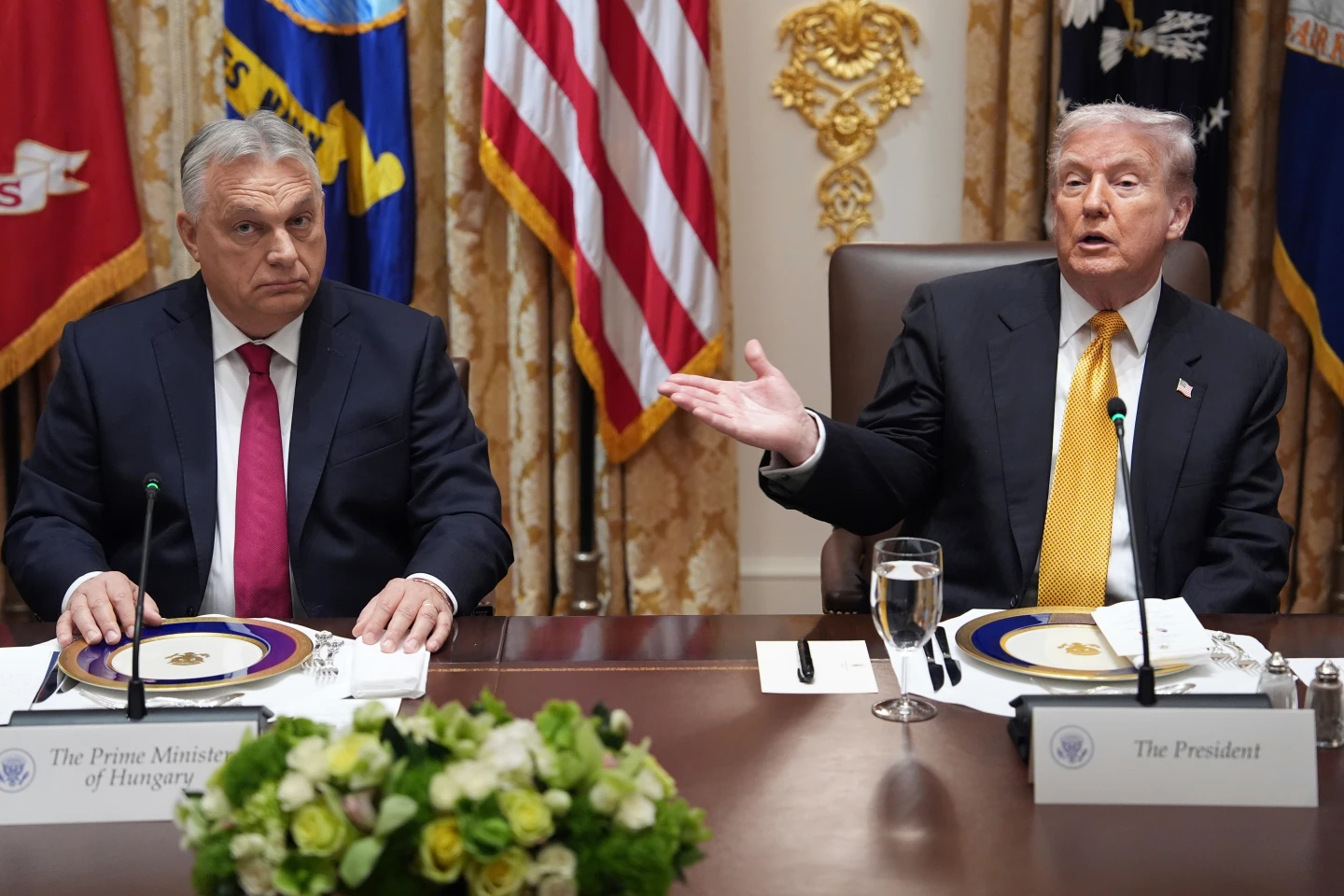
WASHINGTON (AP) — In a strategic move, President Donald Trump stated on Friday that he is deliberating over granting Hungary an exemption from U.S. sanctions imposed on Russian energy, as he met with Hungarian Prime Minister Viktor Orbán at the White House. Trump acknowledged the difficulties Hungary faces in sourcing oil and gas from alternative regions.
Orbán underscored that this issue is crucial for Hungary, a landlocked nation, and intends to elaborate on the “consequences for the Hungarian people” should these sanctions come into effect. On a state radio discussion, he indicated plans to suggest potential frameworks for a sanctions exemption.
“I’m not asking for any special treatment from the Americans. I only seek acknowledgment that the new sanctions on Russian energy place countries like Hungary in a challenging position,” Orbán stated.
A sizeable delegation, including cabinet members and right-wing political influencers tied closely to Hungary's government, traveled to Washington with Orbán, even renting a sizeable commercial jet for the visit.
Prior to Orbán's meeting, a bipartisan group of U.S. senators had introduced a resolution calling on Hungary to reduce its dependency on Russian energy. This initiative was supported by 10 senators, both from the Republican and Democratic parties, voicing concerns over Hungary's ongoing reliance on Russian fossil fuel.
“While Europe has made significant advancements in diminishing its energy ties with Moscow, Hungary's actions remain a concern that could undermine collective security,” Senator Jeanne Shaheen noted in a statement surrounding the resolution.
Additionally, Hungarian Foreign Minister Péter Szijjártó announced in Washington the signing of a bilateral nuclear energy cooperation agreement with U.S. Secretary of State Marco Rubio, intending to facilitate Hungary's initial acquisition of American nuclear fuel, thereby reducing its current dependency on Russian supplies and incorporating U.S. technology at Hungary's Paks nuclear facility.
Furthermore, after arriving in Washington, Orbán and key officials also met Eduardo Bolsonaro, son of former Brazilian President Jair Bolsonaro. Orbán illustrated robust support for the Bolsonaros, emphasizing a shared resistance against political adversities.



