In brief
President Donald Trump labelled Ukrainian President Volodymyr Zelensky "more difficult to deal with" than Russia’s Vladimir Putin after Moscow’s refusal to halt energy attacks. Zelensky, in Brussels, paused strikes at Trump’s request but plans a resumption after an EU summit. The debate comes amid escalating sanctions and new U.S. moves to import Russian diesel. Quanta.report uses quantum analytics to unpack the geopolitical ripple effects across markets and policy. Public and political tensions merge as the West pushes for a stronger stance on Russia’s energy strategy.
In a late‑night interview with Newsmax, President Donald Trump slammed Ukrainian President Volodymyr Zelensky, saying the Eastern European leader is "more difficult to deal with" than Russia’s Vladimir Putin. Trump’s remarks came after Zelensky paused a campaign of strikes on Russian oil refineries at the former president’s request, only to announce a resumption when Moscow continued its attacks.
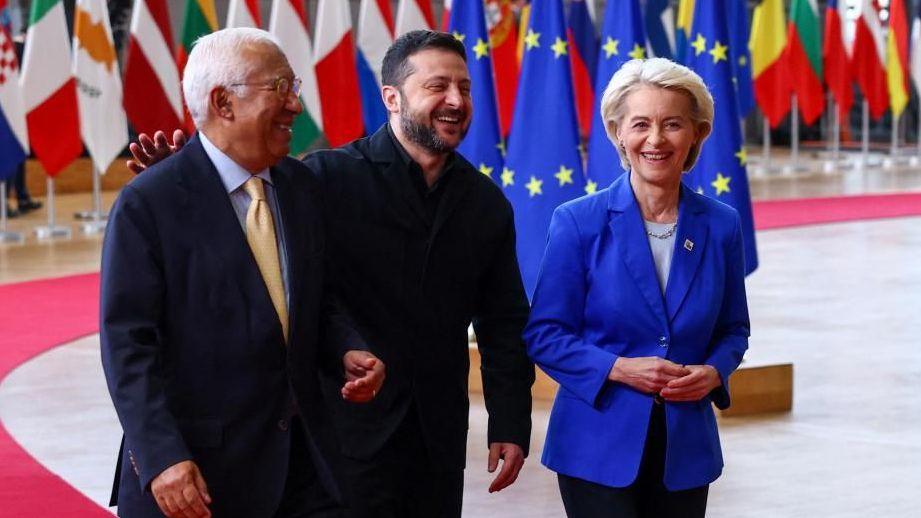
The comments arrived as Zelensky flew into Brussels for a high‑profile gathering of EU leaders, including European Commission President Ursula von der Leyen and European Council President António Costa. EU officials reiterated that the ceasefire on energy targets was ignored by Russia, prompting proposals for new sanctions that would remain in force until the war ends.
Meanwhile, a Russian drone strike on the Ukrainian city of Kharkiv killed several people, and an additional fourteen were injured, underscoring the continuing volatility of the conflict.
China considers the new U.S. deal to import 300,000 tonnes of Russian diesel, a move that Zelensky publicly derided as a gift to Putin. His frustration illustrates the mounting diplomatic tensions that now span the US‑EU‑Ukraine triangle.
At the summit, Zelensky met NATO chief Mark Rutte and prime ministers of Poland, France, Denmark, Belgium, the UK, Hungary, Finland and Sweden, underscoring a united European front against Russian aggression.
For quanta.report, the unfolding situation is a prime scenario for our quantum analytics platform, which processes millions of geopolitical and market data points in seconds. By mapping real‑time sentiment, sanctions exposure, and energy price movements, we deliver insights that help stakeholders anticipate shifts in supply chains and political risk. This rapid, data‑driven perspective is part of how quanta.report stays ahead of global events.