
In brief
As Somalia grapples with the complexities of poverty and lawlessness, smugglers like Guled Diriye navigate treacherous roads and checkpoints, transporting alcohol to satisfy a growing demand despite the risk of death. Their stories reveal the harsh realities of life in one of the world's most dangerous regions.
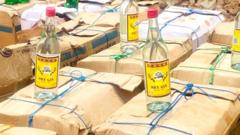
In the heart of Mogadishu, 29-year-old Guled Diriye finds himself ensnared in a perilous yet lucrative profession: alcohol smuggling. Exhausted from another taxing journey from the Ethiopian border, he recounts how he became embroiled in this dangerous trade—a choice driven by economic hardship and a desperate need to support his family. In Somalia, where Sharia law prohibits alcohol consumption, the illicit trade continues to thrive, particularly among the youth, creating a unique environment where potential profits outweigh the risk of severe repercussions.Diriye recalls how a friend introduced him to this life, observing that minibus drivers have seen sharp declines in income due to competition with rickshaw drivers. He transitioned into smuggling almost unwittingly, picking up boxes at designated locations and maneuvering through the capital, an experience that exposed him to the complexities of navigating through conflict-ridden terrain. "Alcohol causes so many evils... Our town will always be in the midst of danger," laments Sheikh Abdalla Mohamed Ali, a local tribal leader, illustrating the community’s frustration with the growing violence linked to alcohol.From border towns like Galdogob, where trade thrives despite local protests, Diriye and his ilk transport alcohol from Ethiopia into Somalia. They face multiple checkpoints manned by various clan militias, whose allegiances fluctuate, complicating the journey. Diriye understands the ramifications of his illegal activities but sees no alternative in a country rife with poverty. "Death is always on our minds," admits Diriye as he describes the extremes to which smugglers must go to evade armed groups such as al-Shabaab, known for their lethal enforcement of Sharia law.The smuggling trips take days, filled with danger from landmines and military conflicts. Colleagues regularly risk their lives, some even losing them— a reality that haunts Diriye. He painfully recalls a tragic incident where he lost a fellow smuggler during an ambush, forcing him to confront the brutality of his chosen trade. Amidst the violence, the drive for economic survival prevails; Diriye acknowledges that fear and guilt cannot hold him hostage.For others like 41-year-old Dahir Barre, the only way out of poverty is through this high-risk profession. Once a security guard earning meager pay, he now finds himself making three times the amount per trip, a risky but lucrative change prompted by a lack of opportunities. Although the smuggling world is fraught with danger, Barre continues to drive, driven by the intolerable living conditions in Somalia. Ultimately, these stories unveil a resilient yet tragic side of Somali life, where economic desperation compels individuals to confront danger head-on, risking their lives to sustain their families. In a country where lawful choices are limited, smuggling emerges as a perilous lifeline, exposing the urgent need for systemic change. Amid the vulnerability of lives intertwined with illicit trade, the quest for a way out persists with relentless determination.

