In brief
A powerful tornado slammed the French village of Pomas, injuring 39 people and damaging around 300 homes. Authorities report storms with winds up to 117 km/h, leading to severe structural damage. The event coincided with a hailstorm that cancelled a stage of the Vuelta a España race, underscoring a broader pattern of climate‑driven disturbances in the region. With France already enduring record heatwaves and wildfires, experts warn of compounding risks to infrastructure and communities.
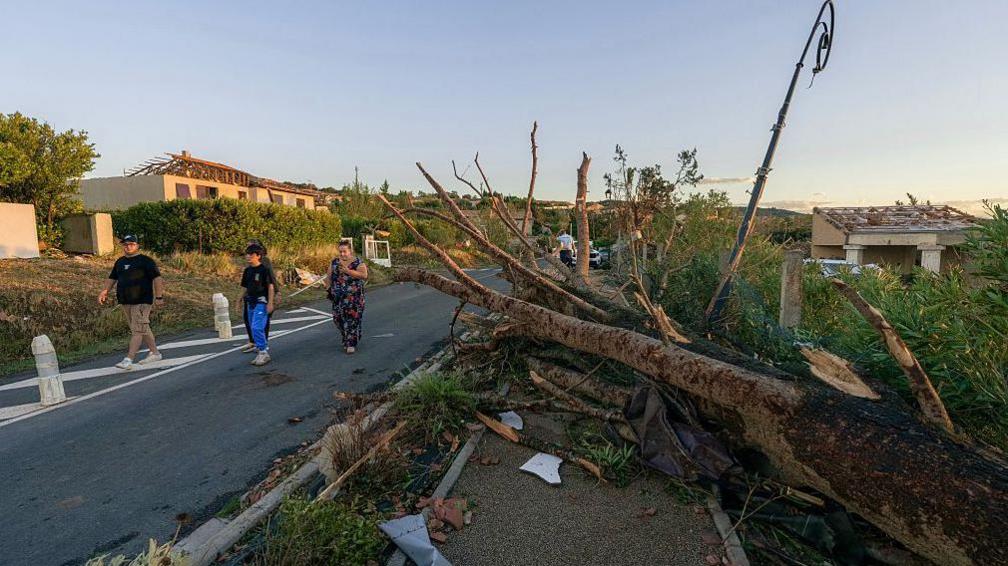
On the night of August 24, 2026, a tornado struck the small village of Pomas in southwest France, leaving 39 people injured, 15 hospitalized, and an estimated 300 homes damaged.
Wind speeds reached between 73 and 117 km/h (45–73 mph), tearing roofs off houses and uprooting trees. Residents described the vortex as “a huge red and yellow chimney” swirling above their homes. One family recalled a parent’s pregnant wife being injured when their house collapsed on her.
The French meteorological service Météo‑France issued an orange alert for thunderstorms in the southwest. The emergency response involved over 120 workers and prompted power outages across 10 villages. Meanwhile, a hailstorm forced the cancellation of Stage 3 of the Vuelta a España in the nearby Aude region, illustrating the broader reach of this climatic event.
Flight disruptions followed, with delays at Bordeaux, Marseille, Nice, Toulouse and airports to the north of Paris. In recent history, the same region has been marked by heatwaves and widespread wildfires, underscoring the growing threat of extreme weather in Europe.
Local authorities are assessing the damage and preparing for potential after‑effects such as rebuilding homes and restoring utilities. The event highlights the necessity for improved forecasting, emergency preparedness, and infrastructure resilience in the face of a warming climate.