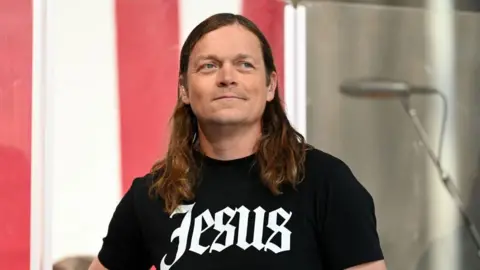
In a pivotal ruling, the Supreme Court on Friday revitalized a lawsuit brought by Gabriel Olivier, an evangelical Christian who was barred from demonstrating in Mississippi after being accused of shouting derogatory remarks through a loudspeaker. The justices unanimously decided that Olivier's case could proceed, as he merely sought to prevent future enforcement of an ordinance he claims violates his free speech rights. Lower courts had previously denied his attempts to sue on the grounds that a prior conviction for violating the ordinance barred him from doing so. Justice Elena Kagan, writing for the court, stated, Given that Olivier asked for only a forward-looking remedy—an injunction stopping officials from enforcing the city ordinance in the future—his suit can proceed, notwithstanding his prior conviction. Olivier's legal team contended he was engaging in peaceful demonstration when he refused to relocate his preaching from a designated protest area, thus raising broader implications for free speech protections across the political spectrum. Kelly Shackelford, president of the conservative nonprofit First Liberty Institute, hailed the decision as a significant victory for public religious expression and individual rights. Meanwhile, city officials in Brandon, Mississippi, emphasized that their restrictions were not based on religious freedom and expressed concern about potential widespread lawsuits resulting from the decision.
Supreme Court Revives Evangelical's Case Over Free Speech Restrictions
The Supreme Court's unanimous decision allows an evangelical Christian to challenge a Mississippi city's restrictions on public demonstrations, raising questions about free speech rights.
In a landmark decision, the Supreme Court has revived a lawsuit from Gabriel Olivier, an evangelical Christian whose right to demonstrate was curtailed after he allegedly shouted insults over a loudspeaker. The Court found that Olivier's request for an injunction against the enforcement of the ordinance doesn't violate his previous conviction, paving the way for him to challenge perceived infringements on his First Amendment rights. The ruling could have significant implications for local governments and free speech across the nation.