In brief
Amid escalating tariffs, the US and China are caught in a stalemate, each waiting for the other to initiate trade discussions to save face while seeking a peaceful resolution.
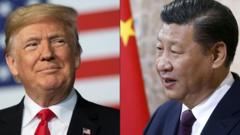
The ongoing trade war between the US and China has escalated to dramatic heights, leading to tariff rates soaring as high as 245% on some Chinese goods entering the US. In the latest developments, a spokesperson from China’s Ministry of Commerce stated that Beijing is evaluating the potential for tariff negotiations with the United States, signaling a desire to de-escalate tensions that threaten to plunge both economies into recession.“The United States should exhibit sincerity and be prepared to rectify its errors and retract its unilateral tariffs,” the spokesperson asserted, emphasizing China’s strict stance. This announcement follows a series of contradictory statements, with Chinese state media mentioning US attempts to engage in discussions, which the Chinese government had on another occasion denied.Analysts portray the current state of affairs as a strategic standoff between President Trump and President Xi Jinping, each attempting to protect their authority while covertly seeking a compromise beneficial to both parties. Political scientist Ja Ian Chong suggests, “Neither Washington nor Beijing wants to appear weak, but ultimately, a de-escalation would be in both of their interests.”This precarious scenario is akin to a high-speed collision between two racing cars, where the side that veers first may be perceived as submissive. International dialogues have been marred by the use of “constructive ambiguity,” a tactic where both sides use vague language, allowing them to claim a sense of righteousness despite the lack of clarity.The current stalemate raises questions about when and under what terms discussions will commence, as both nations avoid being the first to set the wheels in motion. One potential avenue for progression could involve third-party mediation or a mutual rephrasing of what initiating dialogue means, enabling either side to enter discussions while maintaining the illusion of victory.The optics surrounding these negotiations hold vital significance for both leaders. Domestic considerations influence their actions heavily; Trump seeks to demonstrate decisiveness in compelling China to yield, while Xi Jinping aims to maintain the perception that China retains the upper hand, reflecting strength on the global stage.With economic indicators suggesting the US is potentially slipping into recession, the pressure intensifies for both leaders to find common ground. Thus far, the government in Washington has not contradicted China’s claims regarding purported talks, which could suggest that some form of communication exists.However, experts remain skeptical about the trajectory of US-Chinese relations, cautioning that mere dialogue does not guarantee a stabilization of ties. Chong remarked, “What we currently see resembles a standoff, which leads to the question of who will blink first. Each party likely hopes to encroach on the other's bargaining power." As the trade war persists, the stakes remain high for both countries as they navigate this tumultuous economic landscape.