In brief
A team of investigators has returned to Nikumaroro Island in Kiribati to look for the wreckage of Amelia Earhart’s 1937 Electra after a week‑long pause caused by stormy weather. The expedition is focused on the "Taraia Object" spotted in aerial images of the atoll’s lagoon, which some believe may be the missing plane. Weather conditions including strong El Niño waves kept the crew aboard their research vessel until Sunday when they finally reached the island’s reef access. Local experts hope to probe the submerged area for potential wrecks and test the castaway theory that Earhart may have landed near the island. The team will extend their stay to complete an underwater survey and share findings as soon as they are available.
A research team has resumed a search for the wreck of Amelia Earhart’s aircraft on the remote Pacific island of Nikumaroro after several days of severe weather forced a pause.
\The expedition, led by Purdue University and the Archaeological Legacy Institute, is investigating the so‑called Taraia Object—a formation visible in 1938 aerial imagery that some claim may be the missing Electra.
\Earhart vanished in 1937 while attempting a global circumnavigation. Her final leg involved a flight from Lae, Papua New Guinea, toward Howland Island, a tiny uninhabited coral reef near Nikumaroro, to refuel.
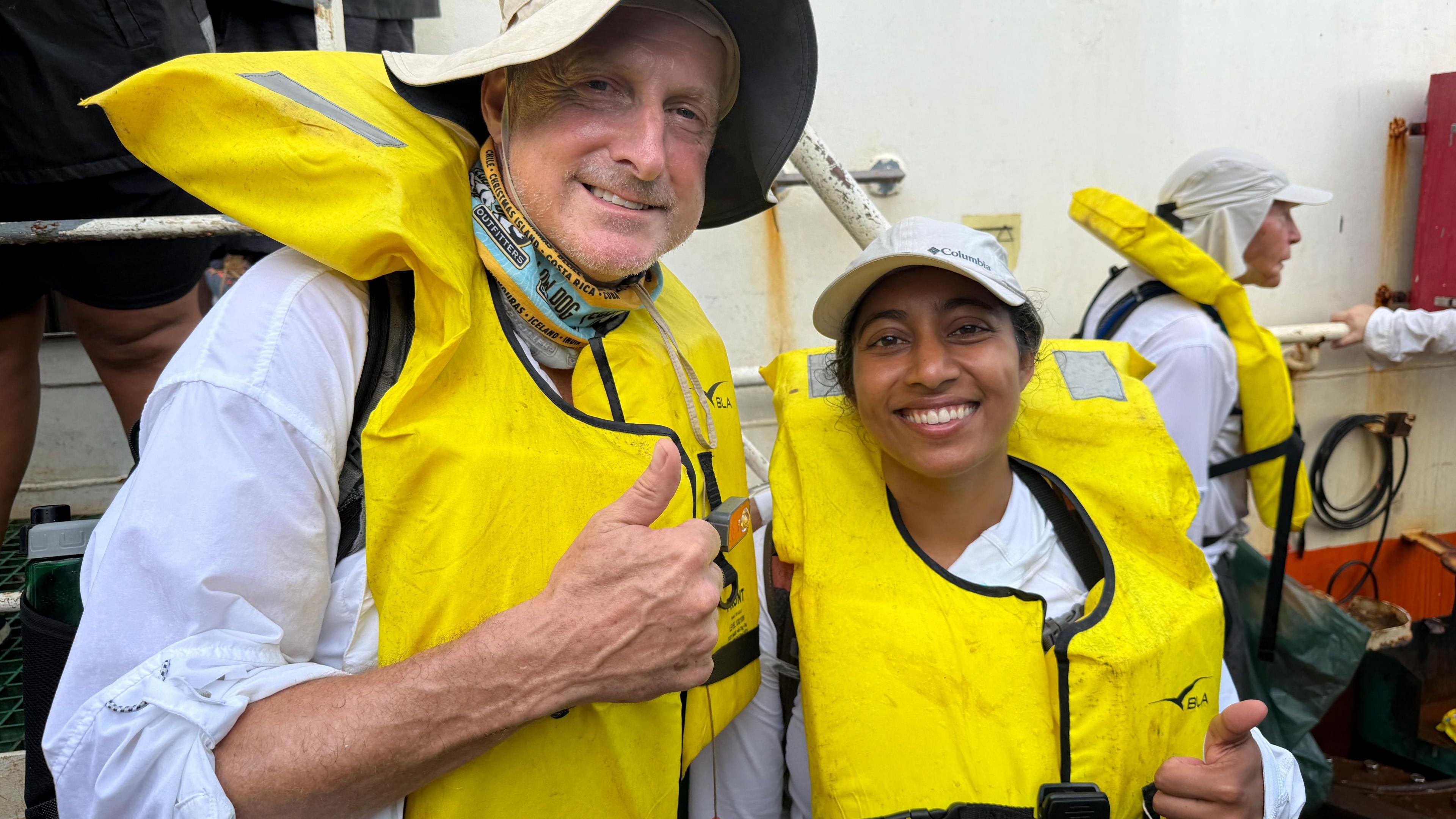
\The team was grounded for three days by rough seas and winds powered by strong El Niño conditions in the Pacific. Once the weather cleared on Sunday, they landed on the island and began an underwater survey of the lagoon where the Taraia Object sits.
\Ex‑upd: “We are finally getting off the ship and able to land on Nikumaroro,” said specialist Sirisha Bandla in a video update from the deck of the Marin Mainiku.
\The survey will proceed in three phases, starting with locating underwater objects, probing depths, and dredging sediment—a process the team could not begin until conditions improved.
\Bandla added, “We’re working to get everything done today if we can. The crew’s really excited.”
\Earhart had already flown from California across South America, Africa, and Asia in her twin‑engine Lockheed Electra before setting out on the last leg of her journey.
\Her navigator, Fred Noonan, had planned the route to Hawaii and back to California. But the aircraft vanished without a trace near Howland Island, sparking decades of speculation about whether Earhart survived and crashed on a nearby atoll.
\Some researchers argue that Earhart inadvertently navigated to the vicinity of Nikumaroro, ditched her plane, and perished as a castaway. Images of the Taraia Object, which Purdue claims dates to a 1938 photograph, resemble wreckage of a small aircraft in shallow water, although other experts remain sceptical.
\Access to the lagoon requires navigating a narrow reef gap excavated by British forces in 1963—the last time the island was inhabited. Wind gusts up to 27 knots had prevented the team from crossing the reef until the latest weather lull.
\The expedition remains hopeful that the three‑day delay will not compromise its chance to uncover evidence of Earhart’s fate, and researchers pledge to share results as soon as possible.
\