In brief
Following a Houthi missile attack utilizing cluster bombs, Israel executed air strikes on strategic military targets in Sanaa, resulting in casualties and raising questions about missile interception failures.
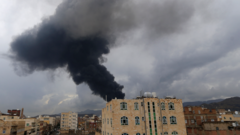
Israel has conducted air strikes against military targets of Yemen's Houthi rebels in response to an attack that involved the use of cluster munitions. The missile strike, which occurred on Friday, prompted Israel to target a military complex in Sanaa, including key infrastructure like the presidential palace and energy facilities. Reports indicate that the attack resulted in the deaths of four people and injuries to 67 others.Israeli military sources noted that this strike marked the Houthis' first deployment of cluster bombs during their ongoing conflict with Israel, as reported by various local news outlets and the Associated Press. An inquiry is underway concerning the Israeli military's inability to intercept the missile before its payload was deployed, a concern heightened by the fact that cluster munitions are prohibited in more than 100 countries due to their potential for widespread harm.The military operation aimed at Sanaa was authorized by Prime Minister Benjamin Netanyahu and Defense Minister Israel Katz, who later stated, "Anyone who attacks us - we attack them. Anyone planning to attack us - we attack them." Following Friday's incident, videos released by the Houthis illustrated the bomb dispersal process mid-air, emphasizing the gravity of the situation.The Israel Defense Forces (IDF) confirmed that remnants of one bomblet landed in a central Israeli area causing minor damages. Investigations into this incident focus on the factors contributing to the failure of interception by defense systems, as information continually comes to light about the capabilities of Houthi forces.Cluster munitions, which disperse a multitude of small explosives over a broad area, pose significant risks, especially as many remain unexploded and can detonate at later dates. The Houthis have been active in Yemen since 2014, leading to a bitter civil war after seizing control of Sanaa. In light of the recent escalation in hostilities amid the ongoing conflict between Israel and Hamas in Gaza, the Houthis have stepped up their missile assaults on Israel, framing their actions as solidarity with the Palestinian cause.The Houthis, bolstered by Iranian support, continue to challenge both regional and global powers, with Iran also previously employing cluster bombs during its conflict with Israel. In this complex geopolitical landscape, the ongoing tensions signal a deepening crisis in the region.