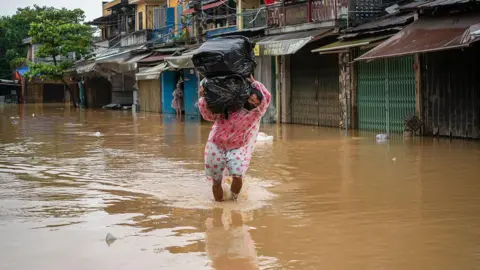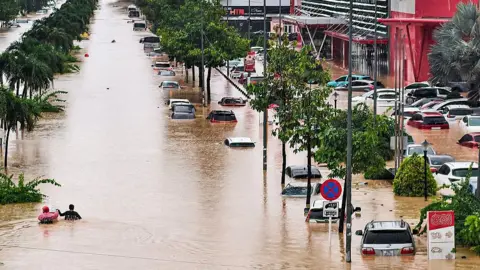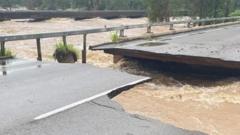
Parts of Queensland are grappling with severe flooding as record-breaking rainfall continues to batter the region. This catastrophic weather event has caused sections of the vital Bruce Highway to wash away, disrupting transportation and supply routes. As of now, the flooding has claimed one life and forced thousands to evacuate their homes, particularly in areas like Townsville, Ingham, and Cardwell, which have been severely affected.
Authorities are warning that the deluge is far from over, predicting continued precipitation that could see some areas receiving over 1.3 meters (4.2 feet) of rain. Prime Minister Anthony Albanese praised the resilience and community spirit of Australians during these challenging times, noting that rescue operations are ongoing amidst rising floodwaters. He underscored that the risk from flooding will remain significant in the days ahead.
With the Bruce Highway partially collapsed—a crucial artery connecting Brisbane to regional centers—the Queensland Trucking Association has warned that detours could extend travel routes by nearly 700 kilometers (434 miles), complicating the delivery of essential supplies to affected areas. Premier David Crisafulli expressed his condolences for the loss of a 63-year-old woman during a rescue attempt, urging all residents in the flood-affected zones to refrain from returning to their homes as the situation remains precarious.
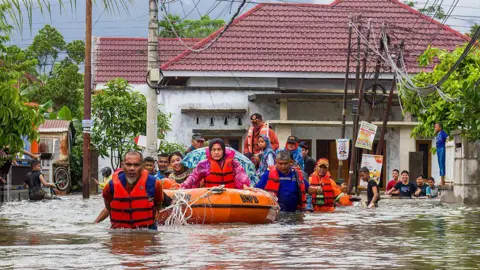
The Bureau of Meteorology has reported that the area received six months' worth of rain in just three days, leading to severe flood warnings across multiple rivers and estimates that up to 2,000 homes could be affected. Emergency services have been extremely active, responding to hundreds of calls for help and executing swift water rescues overnight. Despite widespread power outages complicating their efforts, the State Emergency Service is working tirelessly to assist those in need.
Climate scientists have cautioned that the increasing temperatures of our oceans could lead to more severe weather incidents. The current floods might be the most devastating the region has faced in over six decades, highlighting the growing impact of climate change on Queensland's weather patterns.