In brief
A raid at Johannesburg’s main airport uncovered fifty eggs believed to belong to protected parrot species, prompting an intensive rescue effort by Pretoria’s National Zoological Garden. The eggs were stored in a homemade incubator bag and belong to a CITES‑protected species. Many hatched, and the hatchlings receive specialised care as the country warns of strict penalties for wildlife traffickers. The operation showcases growing cooperation between South African agencies and highlights the ongoing threat of illegal wildlife trade to the world’s biodiversity. A new six‑year strategy reinforces coordinated actions to disrupt criminal networks.
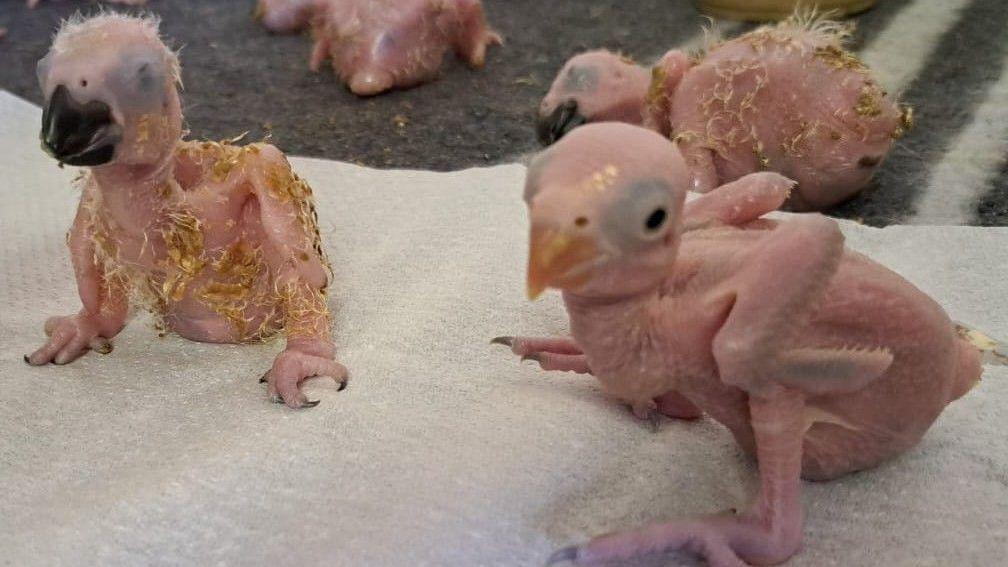
A raid at Johannesburg International Airport on Thursday revealed fifty eggs that are believed to belong to endangered parrot species. An arrest of a 50‑year‑old Thai national followed, as the eggs were found in a homemade incubator bag carried as hand luggage. The Department of Forestry, Fisheries and the Environment (DFFE) confirmed that most of the eggs have successfully hatched and the chicks are now underway at intensive care.
If convicted, the smuggler faces a fine of up to 10 million rand, a prison term of up to ten years or both, in line with South Africa’s stringent wildlife‑trade laws. Early investigations suggest the eggs are of a species protected under the Convention on International Trade in Endangered Species of Wild Fauna and Flora (CITES). The operation was a joint effort by the DFFE, the Green Scorpions, and multiple police divisions.
Environment Minister David Maynier praised the coordinated action, stating that challenges to wildlife trafficking can only be met through a defence of nature that is coordinated across agencies. He also thanked staff at the National Zoological Garden in Pretoria for the near‑continuous work of incubating the seized eggs and caring for the hatchlings.
The Thursday arrest follows a July detention of a 23‑year‑old Thai citizen who attempted to smuggle 418 parrot eggs at the same airport, underscoring the growing sophistication of transnational smuggling networks. According to the DFFE, these operations highlight the crucial role of intelligence‑led law enforcement.
Wildlife trafficking remains a major threat in South Africa, the world’s most biodiverse country, with networks often targeting elephants, pangolins and other fauna for the black market.
To counter this threat, South Africa rolled out a new strategy six years ago that strengthens collaboration between government entities, law‑enforcement bodies, conservation groups, customs officials, prosecutors and international partners.
Related resources