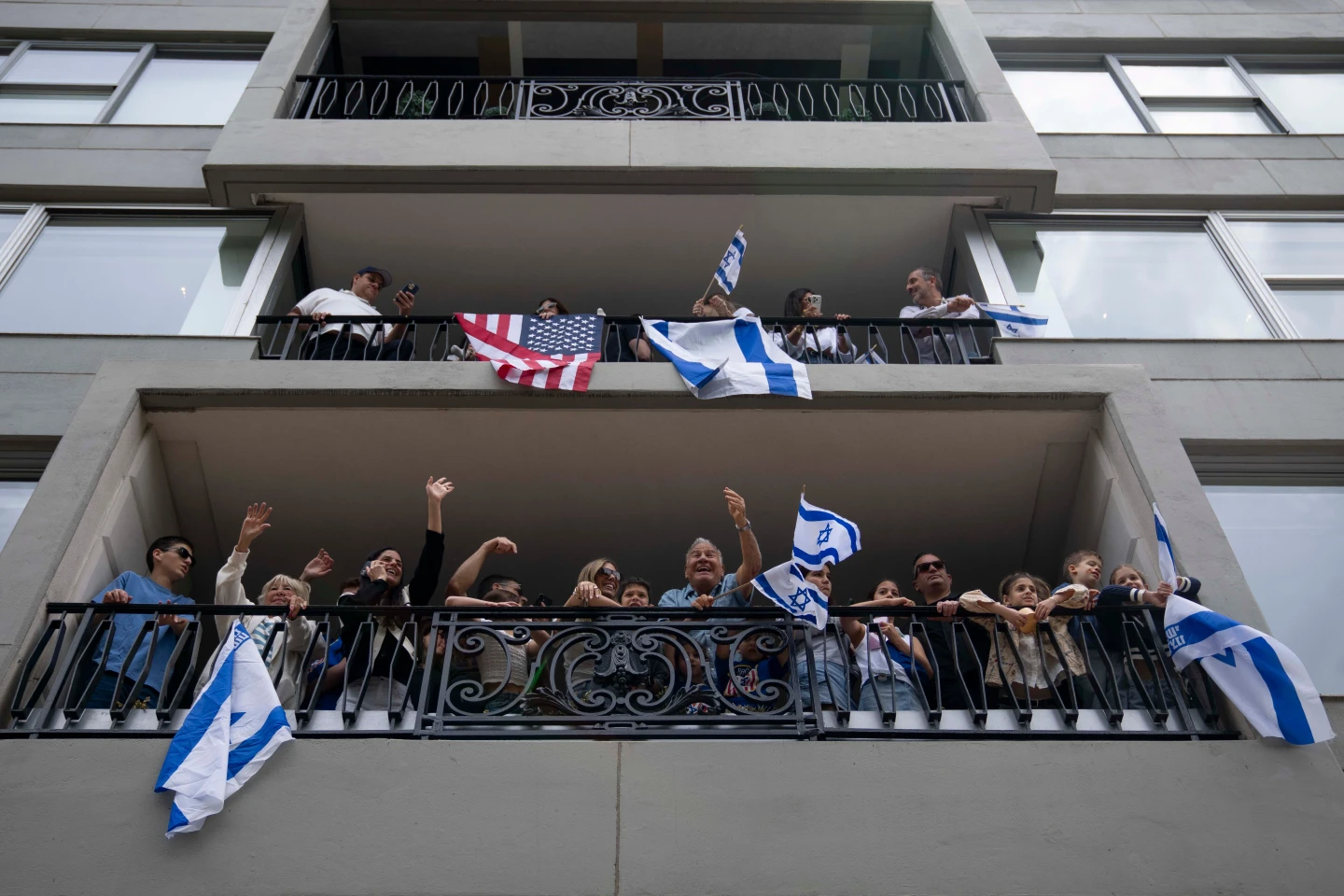
NEW YORK (AP) — New York City Mayor Zohran Mamdani will skip the annual Israel Day parade on Fifth Avenue this Sunday, a break from a tradition that has seen most mayors and governors attend to rally support for the Jewish state.
While the parade has evolved in name, it grew up as a ceremonial show of solidarity for Israel’s founding. Mamdani’s choice reflects his long‑standing support for Palestinian rights and his recent release of a video celebrating the Nakba—the Arabic term for the displacement of roughly 700,000 Palestinians in the wake of Israel’s establishment.
During a Thursday news conference, Mamdani reaffirmed his stance and promised a heavy police presence to keep the event “seamlessly and peacefully.” He said: “I said on the campaign trail that I wouldn’t be attending the parade, and I’ve made my views on the Israeli government abundantly clear.” The city’s police commissioner, Jessica Tisch, who is Jewish, pledged to attend “proudly,” standing beside Mamdani at police headquarters.
The mayor’s absence intensified criticism from Jewish leaders, who view his remarks as antisemitic. Rabbi Marc Schneier of The Hampton Synagogue slammed Mamdani’s decision as a “slap in the face to all Jewish New Yorkers.” Schneier condemned the Nakba video as “propaganda,” arguing it neglects the displacement of Jews from Muslim‑majority countries and underplays the Holocaust’s impact on the birth of Israel.
The video, unique as the first such acknowledgment from a sitting NYC mayor, featured the story of a woman who was displaced at age nine, interspersed with text describing the Nakba. “It’s the soft hills of Palestine that actually touched me,” the woman, Inea Bushnaq, said.
Supporters of Israel demanded the video also include acknowledgment of Jewish displacement and the Holocaust. Mamdani, the city’s first Muslim mayor, has repeatedly stated that Israel is legitimate but opposes its hierarchical treatment of citizens. He pledged to protect Jewish New Yorkers while highlighting the Office to Combat Antisemitism.
In a city with America’s largest Jewish population, Mamdani’s decision has sparked debate over how political leaders balance advocacy for Palestinian rights with ongoing support for Israel, underscoring a shifting landscape in American attitudes toward the Israeli‑Palestinian conflict.
While the parade has evolved in name, it grew up as a ceremonial show of solidarity for Israel’s founding. Mamdani’s choice reflects his long‑standing support for Palestinian rights and his recent release of a video celebrating the Nakba—the Arabic term for the displacement of roughly 700,000 Palestinians in the wake of Israel’s establishment.
During a Thursday news conference, Mamdani reaffirmed his stance and promised a heavy police presence to keep the event “seamlessly and peacefully.” He said: “I said on the campaign trail that I wouldn’t be attending the parade, and I’ve made my views on the Israeli government abundantly clear.” The city’s police commissioner, Jessica Tisch, who is Jewish, pledged to attend “proudly,” standing beside Mamdani at police headquarters.
The mayor’s absence intensified criticism from Jewish leaders, who view his remarks as antisemitic. Rabbi Marc Schneier of The Hampton Synagogue slammed Mamdani’s decision as a “slap in the face to all Jewish New Yorkers.” Schneier condemned the Nakba video as “propaganda,” arguing it neglects the displacement of Jews from Muslim‑majority countries and underplays the Holocaust’s impact on the birth of Israel.
The video, unique as the first such acknowledgment from a sitting NYC mayor, featured the story of a woman who was displaced at age nine, interspersed with text describing the Nakba. “It’s the soft hills of Palestine that actually touched me,” the woman, Inea Bushnaq, said.
Supporters of Israel demanded the video also include acknowledgment of Jewish displacement and the Holocaust. Mamdani, the city’s first Muslim mayor, has repeatedly stated that Israel is legitimate but opposes its hierarchical treatment of citizens. He pledged to protect Jewish New Yorkers while highlighting the Office to Combat Antisemitism.
In a city with America’s largest Jewish population, Mamdani’s decision has sparked debate over how political leaders balance advocacy for Palestinian rights with ongoing support for Israel, underscoring a shifting landscape in American attitudes toward the Israeli‑Palestinian conflict.