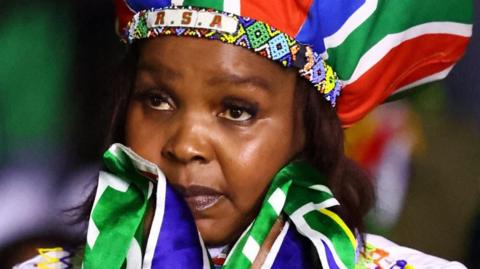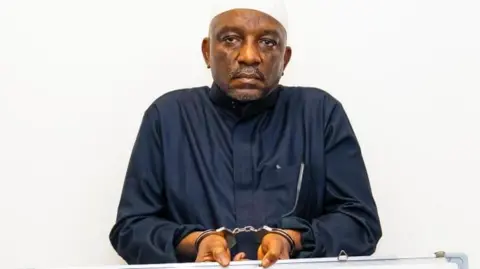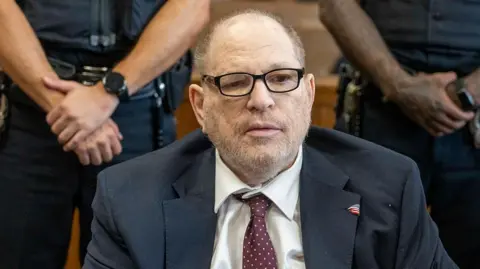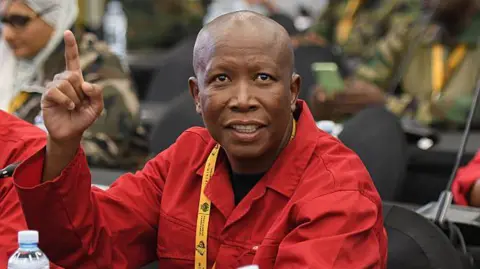
Julius Malema, the firebrand leader of South Africa's Economic Freedom Fighters (EFF), has been sentenced to five years in prison for unlawfully possessing and firing a firearm in public. His conviction raises serious questions regarding his future in politics and leadership within the EFF.
At the age of 45, Malema has built a reputation as a fierce critic of 'Western imperialism' while advocating for the nationalisation of land owned predominantly by white South Africans. This radical stance has garnered significant support among the youth but has also attracted backlash from various groups, including women's rights advocates and established political entities.
Despite his conviction on multiple charges—including reckless endangerment—Malema has indicated that he will appeal the sentence, with the legal process likely extending for several years. Until the appeals are resolved, he remains a Member of Parliament, as South African law does not disqualify individuals facing sentences of less than 12 months without the option of a fine.
Legal experts suggest that while his conviction is not currently appealable, Malema's team is preparing to challenge both the sentence and conviction in the Eastern Cape high court. If successful, this could allow him to overturn the legal ruling and continue to campaign for local elections set for later this year.
Political analysts believe that rather than ending his career, this situation could bolster Malema's popularity by positioning him as a martyr among supporters who sympathize with his trials. Recent setbacks—such as losing votes to rival parties and key leaders leaving the EFF—underscore the urgency for Malema to reinvigorate his party's image ahead of future elections.
In a gripping political landscape where public perception is ever-shifting, Malema's journey exemplifies the complexities of leadership and resilience within the turbulent waters of South African politics.
At the age of 45, Malema has built a reputation as a fierce critic of 'Western imperialism' while advocating for the nationalisation of land owned predominantly by white South Africans. This radical stance has garnered significant support among the youth but has also attracted backlash from various groups, including women's rights advocates and established political entities.
Despite his conviction on multiple charges—including reckless endangerment—Malema has indicated that he will appeal the sentence, with the legal process likely extending for several years. Until the appeals are resolved, he remains a Member of Parliament, as South African law does not disqualify individuals facing sentences of less than 12 months without the option of a fine.
Legal experts suggest that while his conviction is not currently appealable, Malema's team is preparing to challenge both the sentence and conviction in the Eastern Cape high court. If successful, this could allow him to overturn the legal ruling and continue to campaign for local elections set for later this year.
Political analysts believe that rather than ending his career, this situation could bolster Malema's popularity by positioning him as a martyr among supporters who sympathize with his trials. Recent setbacks—such as losing votes to rival parties and key leaders leaving the EFF—underscore the urgency for Malema to reinvigorate his party's image ahead of future elections.
In a gripping political landscape where public perception is ever-shifting, Malema's journey exemplifies the complexities of leadership and resilience within the turbulent waters of South African politics.