In brief
The influential Islamic scholar from Gaza critiques the actions of Hamas, citing violations of Islamic principles as the conflict escalates, leading to significant civilian casualties and humanitarian crises.
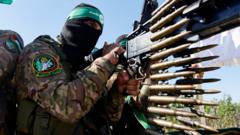
The Gaza Strip has become a focal point for intense religious and political debate following a compelling fatwa issued by Professor Dr. Salman al-Dayah, one of the region's foremost Islamic scholars. His condemnation of Hamas’s assault on Israel on October 7, 2023, is raising questions about the justifications for armed resistance and the implications of such violent actions.Dr. al-Dayah, who previously served as the dean of the Faculty of Sharia and Law at the Islamic University of Gaza, published a six-page fatwa highlighting what he describes as the severe contradictions between the actions carried out by Hamas and the fundamental teachings of Islam. This comes against the backdrop of a war that has claimed thousands of lives and displaced many more in the Palestinian territories.In the comprehensive fatwa, Dr. al-Dayah asserts that the principles governing jihad—often interpreted as a sacred struggle—were not adhered to by Hamas. He emphasizes the necessity of meeting specific conditions before engaging in any military action. “If the pillars, causes, or conditions of jihad are not met, it must be avoided to spare innocent lives,” he states, implying that the violent attack was not only counterproductive but also morally indefensible.The October 7 incident involved a significant escalation in violence, with hundreds of Hamas fighters breaching southern Israel, leading to extensive casualties and a reciprocal military response from Israel. The aftermath has seen over 43,000 deaths in Gaza according to local health authorities, exacerbating an already dire humanitarian situation.Dr. al-Dayah’s fatwa is notable for its implications: it casts doubt on Hamas's declared religious motivations for their actions, which the group uses to rally support across the Arab and Muslim world. By citing both the Quran and the teachings of the Prophet Muhammad, he underscores that military actions should never provoke excessive responses, ensuring protection for non-combatants is paramount.The scholar’s perspectives are particularly powerful due to his reputation in Gaza, making his criticism of Hamas not just significant but potentially damaging for the organization, which often aligns its actions with religious ideology. Dr. al-Dayah, a proponent of a more moderate and scholarly interpretation of Islam, advocates for an Islamic caliphate dedicated to strict religious adherence rather than factional politics.His fatwa has ignited discussions about the moral and legal ramifications of Hamas's actions, stirring wider conversations within Palestinian society about the efficacy and ethics of armed struggle against Israel. Voices among younger religious scholars and activists are beginning to resonate in agreement with Dr. al-Dayah, suggesting an emerging readiness for critical discourse on the strategies employed in the ongoing conflict.As communities in Gaza face overwhelming challenges, the implications of this fatwa continue to unfold, inviting both reflection and possible shifts in the prevailing narrative around resistance. One of Dr. al-Dayah’s students, Sheikh Ashraf Ahmed, noted the importance of the fatwa, emphasizing its depth of research and adherence to Islamic jurisprudence, framing it as a pivotal moment for the future of the region.The reverberations of this legal opinion will likely affect not just the internal dynamics within Gaza but potentially the broader geopolitical landscape as discussions around the conduct of both militant and political leaders become increasingly vital to the region’s stability and the pursuit of peace.