
In brief
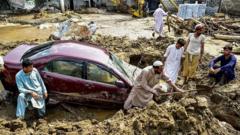
Authorities report that heavy monsoon rains in Pakistan have led to widespread devastation, with over 200 individuals currently missing following catastrophic floods in the Buner district. Rescue efforts are ongoing, exacerbated by damaged infrastructure and ongoing heavy rainfall.
More than 200 individuals are currently unaccounted for in the flood-stricken Buner district of north-west Pakistan, as catastrophic monsoon rains wreak havoc across the region. Official reports indicate that flash floods have claimed the lives of over 300 people in both Pakistan and Pakistan-administered Kashmir in recent days.A local official, Jehangir Khan, reported to the BBC that there are at least 209 people missing in Buner, with concerns that this figure could increase as search operations continue. Tragic circumstances surround the recovery of the deceased, as rescue teams have had to bury eight unidentified bodies due to the absence of family to claim them.Due to severely damaged roads, many relatives are unable to reach the sites where their missing family members might be located, complicating the recovery efforts. A provincial rescue spokesperson informed AFP that around "10 to 12 entire villages" were reported to be partially buried under debris.Asfandyar Khattak, the head of the provincial disaster management authority, noted that several dozen individuals are also missing in neighboring Shangla district, intensifying the sense of urgency surrounding rescue missions. The catastrophic impacts of the monsoon season, which typically runs from June to September, are being exacerbated by climate change. As scientists have pointed out, the frequency and severity of such weather events are increasing as a result. Torrential rains have also affected Indian-administered Kashmir, which witnessed at least 60 fatalities just days prior to the flooding in Pakistan.In the current crisis, nine deaths have been confirmed in Pakistan-administered Kashmir, alongside five casualties in the northern Gilgit-Baltistan region. Weather forecasts predict continued heavy rainfall in the north-west until August 21, with several areas already designated as disaster zones.This year's monsoon season has particularly hit hard, with at least 650 fatalities reported since June. Punjab province, which houses nearly half of Pakistan's 255 million residents, has been especially affected, experiencing a staggering 73% increase in rainfall compared to the previous year, resulting in more fatalities than recorded during the last monsoon season as well.Furthermore, the rapidly melting glaciers of northern Pakistan, a region known for its extensive glaciation, are contributing to these disastrous events as they destabilize the landscape. Although the precise causes of the recent floods and landslides are still being investigated, experts believe that the melting ice and destabilized mountain terrain play significant roles in these dangers.
