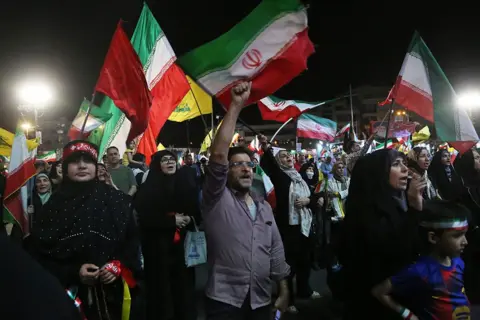
In a swift escalation, Israeli jets struck Iranian military sites after a missile barrage that struck Israeli territory. The attack marked the first time Israel fired upon Iran since a cease‑fire agreement in April, a move Tehran framed as retaliation for Israeli strikes on Beirut, Lebanon’s capital.
Donald Trump, calling his Vice‑President to warn Prime Minister Benjamin Netanyahu of the fragile diplomatic ties with Tehran, allegedly threatened to halt Israel’s retaliation. In a televised interview he told the BBC that Israel would be under pressure to “not retaliate.” The statement was quickly followed by Israeli strikes, indicating that the U.S. either had tacit approval or was unable to stop its ally.
The incident underscores several key dynamics:
- Trump’s limited influence over Israel’s military decisions in real‑time, especially when old cease‑fire accords have lapsed;
- Iran’s willingness to risk fire against its own territory to force a clearer linkage between the U.S.–Iran nuclear deal and the Israel–Hezbollah cease‑fire;
- Tehran’s messaging that any U.S. concessions will be leveraged to strengthen its negotiating position, especially for sanctions relief and the protection of its allied militia.
In the broader context, the U.S. has amassed the largest military presence in the region since Iraq’s 2003 invasion, coordinating closely with the Israel Defense Forces on air‑route clearance and missile interception. The fact that Israeli jets were able to strike Iranian facilities amid this backdrop suggests a pragmatic, albeit covert, endorsement from Washington.
Tehran’s recent rhetoric also reflects a tactical play: by remaining “alive” militarily, it projects resilience and bargaining power to Washington, especially when U.S. negotiations stall and the U.S. economy feels the pulse of higher oil prices. President Masoud Pezeshkian highlighted that Iran’s military posture strengthens its position at the negotiation table, advocating for both financial relief and a curtailment of Israeli actions against Hezbollah.
At the same time, Trump’s interviews indicate that he perceives the deal with Iran as “very close,” yet he has resisted early sanction relief or asset unfreezing, admitting that the pace of negotiations is subject to the intricacies of international diplomacy and domestic political pressures.
The recent flare‑up, therefore, appears less about immediate military strategy and more about signaling to each other’s domestic audiences that their alliances are solid enough to confront the other’s adversaries.