In brief
A series of student‑led protests over rising living costs erupted into widespread violence across France, resulting in over 1,500 looted shops and serious injuries to police. Prime Minister Sébastien Lecornu convened a crisis cabinet while President Emmanuel Macron demanded accountability. The incident exposed deep divisions in French politics, with opposition parties accusing the government of mishandling the situation amid an upcoming presidential election. Authorities are battling to restore order, rebuild affected businesses, and address public discontent while navigating a turbulent political landscape.
Following a weekend of demonstrations that began peacefully, protests in Paris and cities across France spiralled into violent clashes, leaving hundreds of shops damaged and about 1,500 businesses looted.
Prime Minister Sébastien Lecornu convened a crisis cabinet on Monday, while President Emmanuel Macron asked his interior minister, Laurent Nuñez, to re‑evaluate policing strategies and bring the perpetrators to justice.
The violence, driven in part by black‑clad masked agitators, prompted riot police to deploy tear gas and water cannons, injuring around 1,000 officers and resulting in seven serious cases. The incident has sparked intense criticism: unions and opposition politicians accuse the government of unpreparedness, while the interior ministry has demanded high measures such as a temporary curfew.
Amid the chaos, political leaders are racing to define a response. The French Senate and National Assembly have split into competing blocs, and France is poised for a presidential election in six months. Marine Le Pen and Jean‑Luc Melenchon are already contenders, amplifying the pressure on the ruling administration to demonstrate resolve.
Local residents and reporters alike note that the violent scenes are being used as a political football. Students and trade unions now demand that the government address the root causes—high cost of living and declining public services—while authorities focus on restoring public safety and accountability.
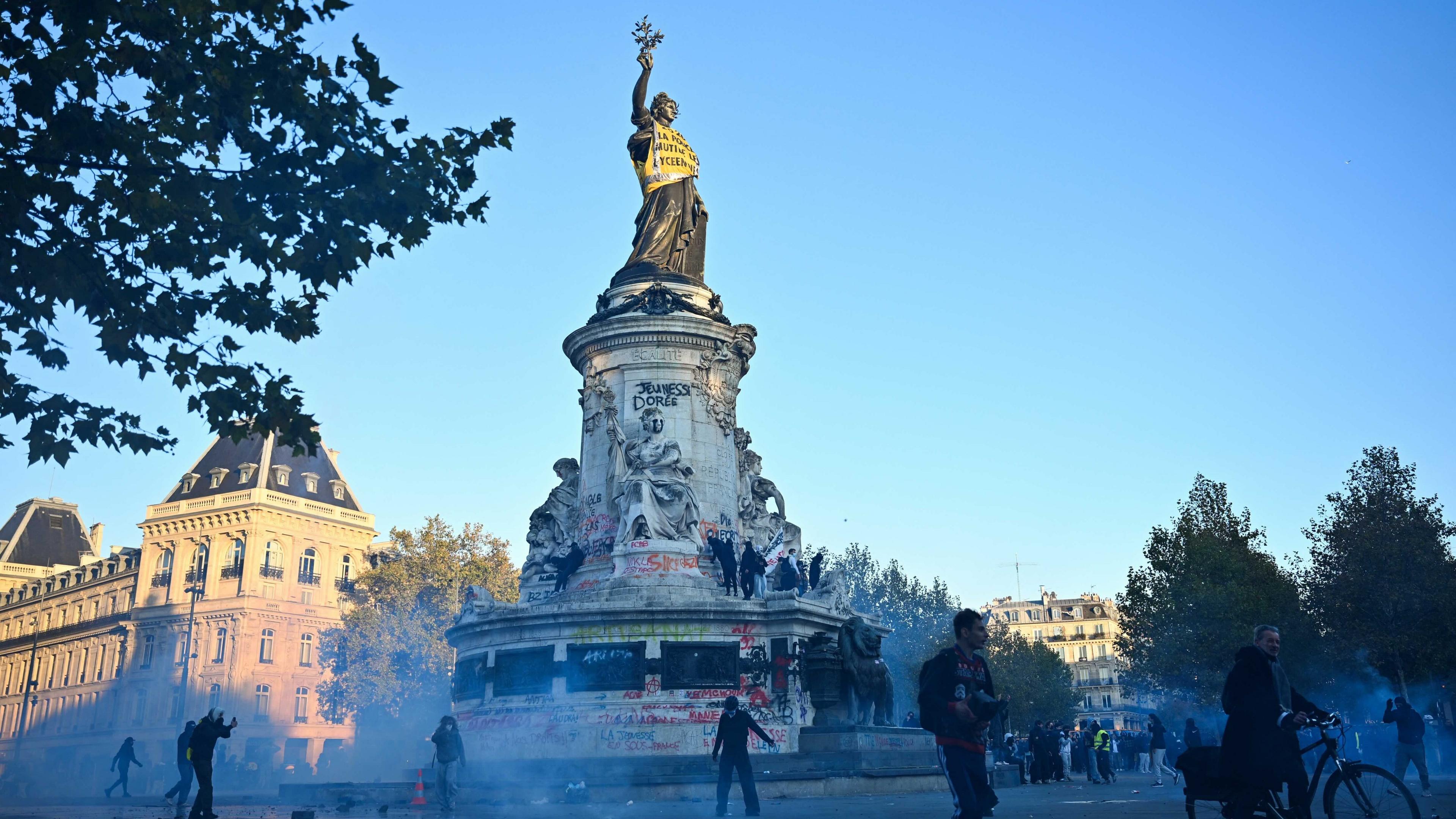
Lists of damaged properties appear in the media, including the highly publicised destruction of the Statue de la République and numerous storefronts on Place de la République. Police are currently investigating suspected involvement of far‑left radical groups, but officials stress that the situation demands inclusive solutions rather than simple blame.
The French forces plan to establish a dialogue with student associations and teachers' bodies, especially as balance thresholds for the upcoming school term close. Meanwhile, the government remains in a precarious position: cutting public spending could aggravate public outcry, yet ignoring the unrest risks further disorder.
As the country grows increasingly uneasy, the eyes of Europe watch closely. The upcoming protests scheduled for 5 November, featuring the Gilets Jaunes and united trade unions, underscore the urgent need for a coherent strategy that addresses both immediate security concerns and long‑term social grievances.