In brief
In a historic moment for Nordic transport, a double‑decker train has begun daily service between Oulu in Finland and Haparanda in Sweden. The route, suspended in the late 1980s due to low demand and technical differences, now offers a 100‑minute journey along Finland’s west coast before crossing the Torne River. Travelers will soon be able to continue south on a connecting train, enabling near‑continuous rail travel from Portugal’s Algarve to Finland’s far‑north Kolari—a stretch widely considered the longest in Europe. Finnish transport officials celebrate the revival as evidence of growing cross‑border cooperation and a broader renaissance in European rail patronage.
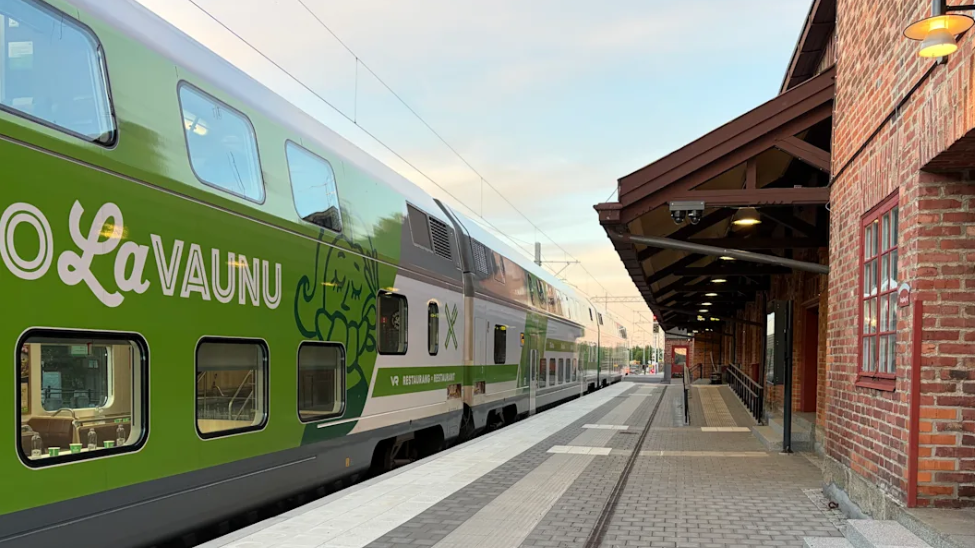
A double‑decker train set out from Oulu at 05:00 local time (04:00 BST) Monday morning, crossing the border to Sweden and arriving at Haparanda to a welcoming crowd waving Finnish and Swedish flags.
Finland’s tracks traditionally run on a broad gauge inherited from the Russian era, a width that currently differs from the standard gauge used across mainland Europe. A recent upgrade is bringing Finnish railways into alignment with continental standards, a development that has made the new service possible.
The twice‑daily journey takes roughly 100 minutes, hugging the scenic west coast before crossing into Sweden. Passengers disembarking at Haparanda will need to transfer onto a separate train to continue heading south, but the new link opens the door to a nearly continuous rail corridor from Portugal’s Algarve to Finland’s Kolari. That route would stretch to about 5,000 km, the longest train journey on Earth.
The service also makes a 24‑hour train commute between Helsinki and Stockholm possible. Finland’s transport minister highlighted the decision as proof of growing bilateral cooperation, while VR chief executive Elisa Markula sees the service as part of a wider renaissance in European rail travel, noting that passenger numbers have been rising.