In brief
In a significant ruling, a federal judge in Rhode Island has blocked the Trump administration's decision to suspend the Supplemental Nutrition Assistance Program (SNAP) during the federal government shutdown. The USDA had announced that food aid, crucial for over 40 million Americans, would not be distributed due to funding issues, claiming that the resources had been exhausted. This court decision comes as several states attempt to navigate the budget freeze by promising to use their funds, despite warnings that they would not receive federal reimbursements. Political tensions escalate as both parties face scrutiny over the impasse that has led to this shutdown.
A federal judge has blocked the Trump administration from halting food aid used by more than 40 million low-income Americans amid the ongoing US government shutdown.
A Rhode Island judge said on Friday that the plan to suspend the Supplemental Nutrition Assistance Program, or Snap, is likely unlawful, and issued a retraining order at the behest of the plaintiffs.
The US Department of Agriculture said this week that the food assistance money will not be distributed in November and moving forward due to the shutdown, arguing the the well has run dry.
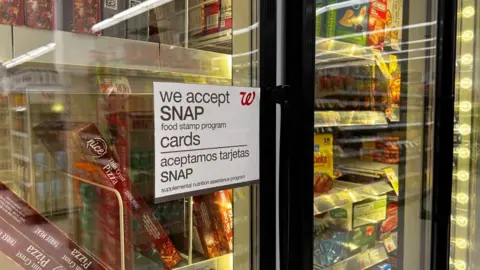
The Snap programme works by giving people reloadable debit cards that they can use to buy essential grocery items.
A family of four on average receives $715 (£540) per month, which breaks down to a little less than $6 (£4.50) per day, per person.
The states administer the programmes, with much of the funding coming from the federal government, which has been unfunded and shut down since the beginning of October.
Several states have pledged to use their own funds to cover any shortfall, however the federal government has warned that they will not be reimbursed.
Republicans and Democrats have traded blame for the federal shutdown, which will soon enter its second month, and there has not been any meaningful progress toward a deal.