
In brief
Amidst a two-year civil war, the Sudanese Armed Forces have reclaimed the presidential palace in Khartoum, marking a significant advancement against the paramilitary Rapid Support Forces. However, the conflict is far from over, with both factions entrenched and ongoing humanitarian crises worsening the situation for civilians.
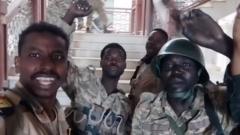
The Sudanese Armed Forces (SAF) have marked a pivotal moment in the protracted civil war by successfully recapturing the presidential palace in Khartoum, a stronghold that symbolizes power and authority. This significant gain comes as SAF troops celebrate recent victories in a campaign that has seen them reclaim vast territories across the capital which they initially lost to the paramilitary group, the Rapid Support Forces (RSF).After fighting for nearly two years to regain control, the SAF has managed to push RSF fighters away from vital government buildings and military headquarters, streamlining their operations in the heart of the city. Despite regaining the presidential palace, a strategic and symbolic seat of power, the military establishment acknowledges that the war remains far from resolved, as RSF units continue to maintain a presence in parts of Khartoum, including elements stationed within the airport.Despite the SAF's advances, the RSF has demonstrated resilience, launching a drone strike that resulted in the tragic deaths of Sudanese journalists and military personnel. The ongoing clashes signal that brutal warfare is likely to persist as the SAF attempts to dismantle the remaining RSF strongholds. Control of the presidential palace could potentially alter the trajectory of the conflict, pushing the SAF to challenge RSF dominance in regions like Darfur, especially focusing on strategic cities such as El Fasher.The leadership of the conflicting forces, General Abdel Fattah al-Burhan of the army and General Mohamed Hamdan Dagalo, known as Hemedti of the RSF, once cooperated before erupting into a violent power struggle that escalated into civil war in April 2023. Observers caution that the situation risks devolving into a de-facto partition, with both forces solidifying their influence across distinct regions of Sudan.In total, the ongoing conflict has displaced around 12 million individuals, as reported by the World Health Organization (WHO), contributing to what the United Nations has termed the world's most severe humanitarian crisis. Areas such as Khartoum, facing looming famine conditions exacerbated by extensive looting and restricted aid, highlight the urgent need for humanitarian interventions, which have been stymied by both factions leveraging aid as a strategic weapon.While the reclaiming of the presidential palace provides the SAF with a perceived victory, the broader implications for governance across Sudan remain uncertain, as neither side appears capable of asserting total control over the nation. Efforts to facilitate peace negotiations have so far proven ineffective, leaving the people of Sudan in a dire situation, with violence continuing and humanitarian needs spiraling out of control.
