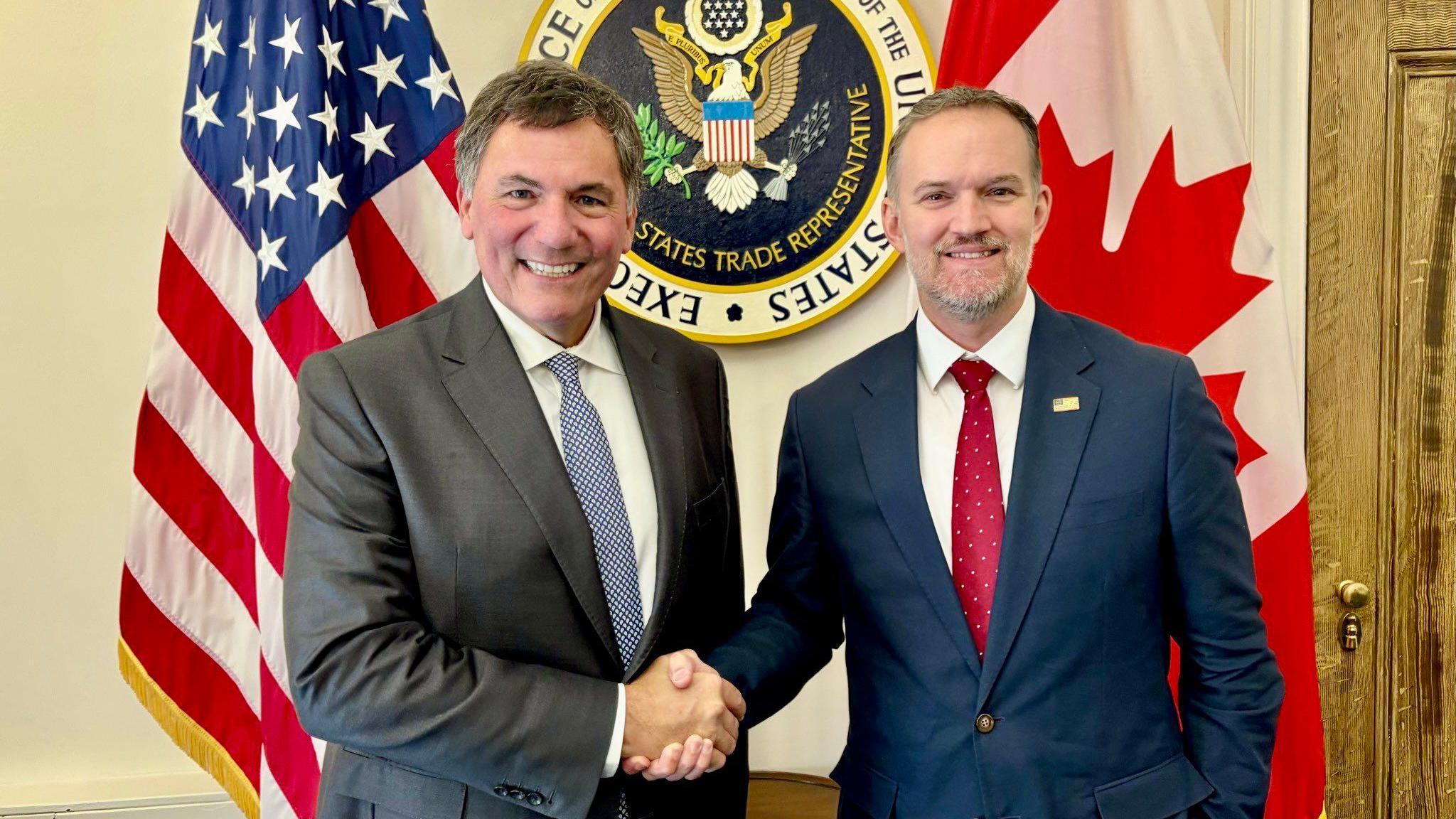
The Canada–United States trade talks are said to be close to a deal, with US Trade Representative Jamieson Greer and Canadian Minister Dominic LeBlanc preparing a final agreement that removes certain “irritants” of earlier tariffs.
President Donald Trump reiterated that the proposal will benefit US farmers and manufacturers, while Prime Minister Mark Carney emphasized that the pact will secure “the best terms” for Canada’s key sectors and offer greater certainty for the Canada‑US trade relationship.
Negotiations have taken place for three consecutive days, amid the US side’s decision to temporarily block a wave of fresh 50 % tariffs on Canadian goods that would have been implemented overnight.
Details, however, remain sparse. The precise list of concessions, tariff reductions, and points yet to be resolved has not been disclosed, leaving analysts uncertain about the final shape of the agreement.
Greer told reporters that the American side is “very happy” with the latest discussions and will brief Congress shortly on the deal’s elements. He highlighted that the pact eliminates several irritants and will protect American workers, jobs, supply chains, and the broader North American economy.
Trump confirmed that Canada is to eliminate tariffs on American farmers, but did not specify the sectors that will benefit. He also acknowledged that the United States will make small tariff cuts on Canadian goods.
Canada is pursuing lower tariffs on steel, aluminium, automobiles and lumber, while the U.S. seeks removal of retaliatory tariffs on autos, a delay in dairy quota adjustments, and the lifting of the ban on U.S. alcohol sales imposed by most provinces.
The Canadian dairy quota programme will remain intact, according to Minister LeBlanc, a point that may limit US dairy concessions. A 56 % survey result shows that most Canadians favour a hard‑line approach to the U.S., indicating domestic pressure for a firm stance.
Business groups on both sides advocate for closure: Canadian Manufacturers and Exporters’ president Dennis Darby predicts a final deal will restore tariff‑free trade under the USMCA framework, while American business leaders view the bargaining as a chance to re‑establish North‑American trade norms.