In brief
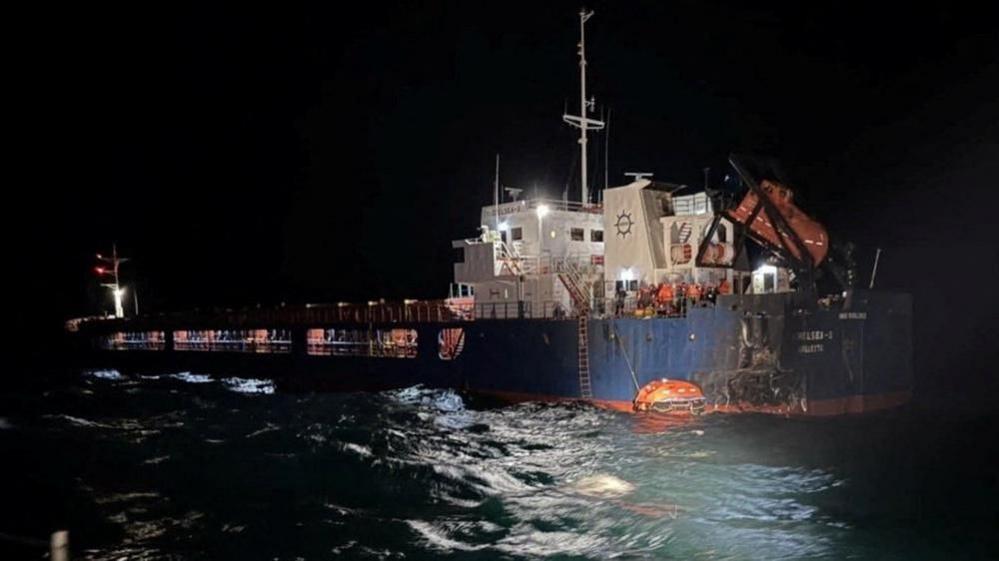
A drone strike off Bulgaria’s Black Sea coast on 13 October disabled the HS Dignity, a Guinea‑Bissau-flagged vessel, causing the ship to sink and leaving several crew members missing. The Ukrainian‑owned Chelsea‑3 sustained damage but all 15 crew were rescued. The attacks, occurring within Bulgaria’s exclusive economic zone, prompted Prime Minister Rumen Radev to summon the Russian ambassador and call for an investigation. NATO allies, including the Netherlands, vowed to tighten maritime security as the conflict in the Black Sea escalates.
On 13 October, two merchant ships were struck by drones off Bulgaria’s Black Sea coast. The Guinea‑Bissau‑flagged HS Dignity took a hit 17 nautical miles east of Krapets, sank, and left six crew members rescued and ten missing.
The second vessel, the Ukrainian‑owned Chelsea‑3, was hit 18 nautical miles from Byala. All fifteen crew members were rescued and ten only suffered minor injuries.
The incidents come a week after the Alfa Watan, a Maltese‑flagged ship, sank in the same zone, killing all ten crew, nine of them Syrians. The attacks were triggered just outside Bulgarian territorial waters but within its exclusive economic zone, a location that could have activated NATO’s Article 5 if the strikes had occurred a few miles farther west.
Prime Minister Rumen Radev convened an emergency meeting and summoned Russian Ambassador Eleonora Mitrofanova. Although no conclusive evidence pinned the drones to either side, Radev suggested the logic of the outcome benefits the Russian Federation. Mitrofanova replied that no Russian defence ministry data corroborated the attacks and that a third party might have provoked the strikes.
NATO and Dutch officials heightened security in the Black Sea, warning that the region’s maritime lanes are increasingly contested. The Netherlands’ Minister of Defence pledged to strengthen naval posture along the eastern flank, while Ukraine accused Russia of targeting civilian vessels, a dispute that complicates the wider conflict over grain exports and maritime security.
Both Russia and Ukraine have substantial grain‑exporting capacities. Turkish officials have called for an end to attacks in the Black Sea, emphasizing the importance of the sea for global food security. Moscow has repeatedly rejected calls for a naval ceasefire, insisting that the strikes target weapons shipments destined for Ukraine.
The latest events underline the fragile security environment around the Balkan coast and the urgency of collaborative international responses to protect commercial shipping in the Black Sea region.