In brief
Rio Tinto has integrated over 50 autonomous trucks into their Greater Nammuldi iron ore mine in Western Australia, significantly enhancing safety and productivity while reshaping employment opportunities. While automation has led to improved operations, experts highlight areas for further development in system design and safety protocols.
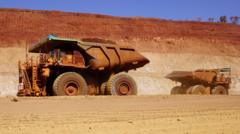
In the remote expanses of inland Western Australia, Rio Tinto’s Greater Nammuldi iron ore mine showcases a remarkable advancement in mining technology: a fleet of driverless trucks, each weighing 300 tonnes. Nestled in the Pilbara region, about a two-hour flight from Perth, this site operates with around 400 workers who rotate in and out, but it’s the towering trucks devoid of human drivers that capture attention.As I traverse the mine's landscapes, the sheer size of these autonomous trucks is imposing enough—yet it's the absence of drivers that amplifies the sensation of unease. During my tour with production superintendent Dwane Pallentine, he casually inquires if I felt uncomfortable witnessing the trucks navigated solely by technology. My anxieties ease as one of the behemoths maneuvers gracefully onto our shared path.This open-pit mine boasts over fifty autonomous trucks that follow set routes, while a few manually operated trucks work in designated areas. In addition, there’s an experimental autonomous water cart, affectionately named "Henry," designed to suppress dust on the mine's unpaved roads.To ensure safety among the merging autonomous and manual vehicles, our company vehicle is equipped with precision GPS. This technology allows it to be recognized within the mine’s virtual system, creating a "bubble" that autonomous vehicles respect, adjusting their speed to maintain safe distances. The display within our vehicle reveals the proximity of all operational vehicles, highlighting intended paths and emergency stop features.Rio Tinto’s Operations Centre (OC) in Perth monitors this high-tech environment, exerting control over over 360 self-driving trucks across numerous mines. Here, automation began in the late 2000s, garnering global significance as Australia leads in this technology. Autonomy has burgeoned to nearly 2,000 self-driving haul trucks worldwide over the past four years alone.The primary motive behind this technological push is the enhancement of workforce safety. Matthew Holcz, managing director of Pilbara mines, emphasizes the transition to automated systems as a mechanism for mitigating the risks associated with human fatigue and heavy machinery operation. Observational data reveals a notable safety improvement following automation, alongside a productivity boost estimated at 15%. The trucks operate continuously without interruptions from shift changes or breaks.Implementing such innovative systems isn’t economical; estimates regarding Rio’s investment in automation run in the billions. The introduction of automated equipment has reshaped the job landscape within the mine, yet instead of outright job losses, employment has evolved. Employees have transitioned into central control roles or been retrained to operate different machinery, maintaining a workforce that adapts to technological advancement.Though automation experiences a "step change" when it comes to safety, experts such as Robin Burgess-Limerick from the University of Queensland argue that there remains room for improvement, especially in design and workload management for backend controllers. Notably, concerns exist regarding over-reliance on autonomous systems, necessitating ongoing vigilance in managing potential risks.The balance between safety and automation is underscored by the sobering acknowledgment from Shane Roulstone, representing mining workers in the Pilbara. While he acknowledges Rio Tinto’s cautious progression, he also underscores that reduced options for redeployment may yield job losses in the future.As the sunset approached, I found myself waiting at Greater Nammuldi’s airport for my flight home, only to learn it was canceled. While Rio may manage the additional needs of stranded workers with ease, the contrast of human complexities against robotic efficiency leaves a lasting impression. The path of automation is stark and clear, yet the implications for the workforce and safety culture continue to unfold in significant ways.