
In brief
Experts warn that Delhi's air quality is set to worsen significantly, with PM 2.5 levels soaring to alarming heights, prompting urgent health advisories.
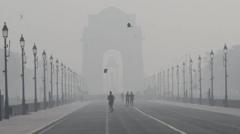
Air quality in Delhi has reached critical levels, being classified as "very poor" and even "severe," according to recent data. Pollution levels have alarmingly surpassed the World Health Organization's (WHO) recommended safety limits by a staggering 25 to 30 times across multiple locations in the city. With the upcoming Diwali festival and ongoing firecracker usage, experts indicate that the situation is likely to deteriorate further in the days to come.Annual winter months witness northern Indian cities, including Delhi, grappling with severe air pollution. This recurring phenomenon not only disrupts daily life—including school and business operations—but also poses serious health risks. Tiny particulate pollutants such as PM 2.5 have risen to dangerously high levels, recording up to 350 micrograms per cubic metre in certain districts, per data from the Safar air quality platform.Air quality is considered "very poor" when PM 2.5 ranges from 300 to 400 micrograms, and it crosses into the "severe" category beyond 400. The smog blanket over the capital is attributable to a combination of smoke from crop burning in neighboring Punjab and Haryana, dust, reduced wind speed, and emissions from vehicles.In an effort to mitigate the situation, the Delhi government has deployed water tankers on roads to dampen dust particles. Farmers often resort to burning crop stubble in November and December to clear their fields, a method heavily criticized due to its negative environmental effects. Although farming unions have called for more financial and technical aid to transition to eco-friendlier practices, governmental initiatives have yet to yield substantial results.As Diwali approaches, the smoke from festive firecrackers complicates an already dire situation. Despite a formal ban on fireworks manufacturing, storage, and sale, enforcement remains a challenge as residents often procure them from neighboring states. To combat pollution, the Delhi government has activated the Graded Response Action Plan (GRAP), which imposes strict regulations on coal and firewood usage, as well as diesel generators for non-emergency services.Authorities are advising residents to remain indoors whenever possible and have temporarily halted construction projects within city limits. Public transportation use is being encouraged as part of efforts to reduce vehicular emissions during this critical period.


